Preaching and the Mission of God: Faithful Witness after Christendom by David Fields
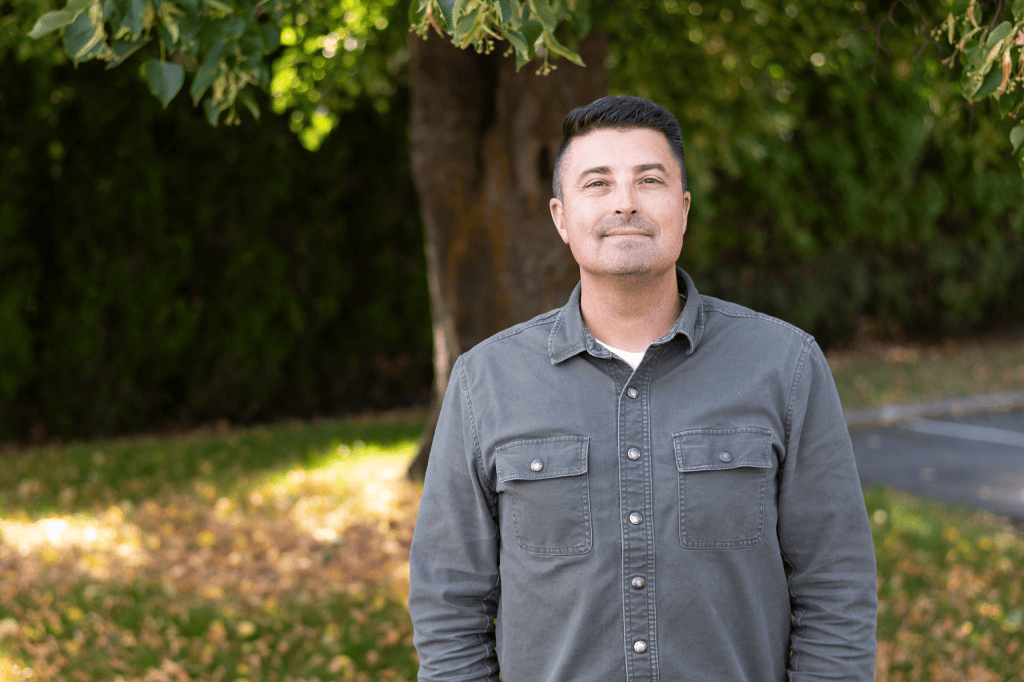
Preaching and the Biblical Story – Dr. David Fields (Episode 14)
bible Christendom Christian god Interpretation jesus Minisrtry Mission Missional Narrative pastor preaching Story Witness
Comments
12 responses to “Preaching and the Biblical Story – Dr. David Fields (Episode 14)”
-
The section of the podcast the resonated with me the most was the conversation around contextualization. Dr. Piva brought up the point that people sometimes misunderstand contextualizing the message of Scripture is the same as compromising the message. In response, Dr. David Fields explained that at the basic level, translation must happen. Going further, he explained, “The message doesn’t change, but how you say it is going to be understood more or less based on the hearers.”
Over the past two decades, I’ve had the opportunity to serve in pastoral ministry in very different contexts. From rural Alberta, to urban centre Ontario, and back to rural Ontario, I’ve ministered in very different contexts with distinct cultures. In each of these settings, I’ve had to wrestle through how I can communicate the message of Scripture faithfully and effectively. Admittedly, sometimes I’ve communicated in ways that I personally find helpful, but not necessarily in ways that will land with my audience. And I think that this is something that needs to be added to the conversation on contextualization. It is hard, sacrificial work on the part of the communicator. There are times when I haven’t had the time or energy to bridge the cultural gap in my communication.
This podcast has been a helpful reminder that I am not culturally neutral. If I want my preaching ministry to be effective, I need to act like Paul in Athens. I need to know my cultural context and preach considering that context. To do this well, I believe it takes humility. I need to make sure I am not holding my cultural biases above the culture of the people I am trying to reach. I believe it also takes time. It takes time to get to know the culture of my town, and it takes time to craft a sermon that is geared to my cultural setting.
Remaining humble and finding the time to craft my sermons for my context has been a challenge this past year. This conversation has been a good reminder that I need to continue to work hard in both of these areas. I also need to spend more time in prayer and ask the Spirit to guide me so I may be a more soft hearted, and culturally aware preacher.
LikeLike
-
1. I still need to grow in what he calls missional hermeneutics. When I think about interpreting Scripture, I almost always start with careful exegesis: what the text meant in its original setting and what lasting theological truth it carries. That work is essential, but I tend to stop there. What I need to develop is the further question of how the passage actually forms me into a clearer witness. The Bible is not only something to understand correctly; it is also meant to shape how I speak about Christ to the people around me in my own community.
2. The reminder that not everything is a competition landed with particular force. Since I was a child I have carried a strong need to be perfect. I was picked on a lot, and somewhere along the way I decided that if I did everything exactly right I might finally be left alone. That old habit still shows up in ministry as an unspoken pressure to measure myself against others. Hearing Fields say that each person brings their own distinct witness helped loosen that grip a little. It is slow work, but even small shifts in perspective make a difference.
3. The post-Christendom setting does bring real difficulties, yet I think Fields described it almost entirely in negative terms. A culture that has largely moved on from its Christian inheritance is harder to reach in some ways. At the same time, the very loss of that shared background can make contextualization simpler, because the situation begins to look more like the first-century pagan world the apostles addressed. In my own reading of Scripture, I have noticed that the exegetical, theological, and homiletical ideas often sit closer together in that kind of setting. A more secular Canadian context is not wholly negative; in some respects it makes the missional edge of the text clearer.
4. My own time in the Word lately keeps pressing the same reality: the gospel is participatory. David Fields returned to that theme here as well. It has me thinking that preaching is more than simply handing on information. It involves offering something of my own life and character along with the message. In an age of advancing AI, that is one clear reason a machine cannot fully replace a human preacher. At the same time, it serves as a personal caution. I have to keep working so that my sermons do not come across as polished but lifeless.
LikeLike
-
This interview is both inspiring and informative. The account of David Field’s experience is not just about missional preaching, but it is about mentorship and growing up in a healthy church environment, and these are perhaps the two most important things that shaped his ministry. He said some things we could gloss over, but in truth, they matter. For example, “I grew up in a healthy church, and that may not be the story of some of you” speaks volumes about his formative years. Healthy churches are fertile grounds for growth because they provide an ideal environment for personal and spiritual development. When a church is not bedevilled by conflict and competition, spiritual and structural growth becomes organic.
Another major influence in his preaching ministry is mentorship. Mentors played a vital role in defining/molding him into a great preacher. Melfair, Daryl Johnson, and Tim Keller are some of the preachers that influenced his teaching ministry. They “entrusted,” “gave him opportunity to preach”, recognized his gift”
This quote sums up everything about preaching. “Preaching is meant to be a moment when “God happens”, it is not about the man preaching or the words he says, rather it is a time to open the door for God to do God’s thing recognizing the dynamic acts of the Holy Spirit during those moments.” Preaching should be about participating in God’s mission, joining Him where He is working within the community and in the hearts of the people. When we accept this truth, preachers will not feel pressure to produce results because it is God’s work, and He is always at work. For me and my preaching ministry in the future, these words are liberating.Contextualization is a concern addressed in the interview that is worth mentioning. No congregation is culture neutral; therefore, the Gospel can be proclaimed in a culture not at culture. Paying attention to culture and context is important to get to the heart of the people.
The concept of shared pulpit is a great idea for ministry, and it is something I might emulate in my ministry. Before my experience in Canada, I was used to a single-pastor ministry where only the senior pastor preaches on Sunday, although others have opportunities to preach during midweek services. My present place of worship practices shared teaching and preaching, giving both students and laymen opportunities to preach and bringing diversity to the church’s preaching ministry. Like David said, “The idea is not one voice, but multiple voices being heard is a great way of teaching God’s people how to reach.”
LikeLike
-
I really enjoyed this episode! I have a couple comments on his points:
1. The “missional hermeneutics” is something that I have to work on. Whenever I think of hermeneutics, the only thing that comes to my mind is exegesis, that is, find what the text meant in its original context, and extract the timeless theological truth from it. However, what I lack is the missional hermeneutics, which is how does the Bible make me a better witness.
2. I don’t know if it’s a coincidence or not, but both my texts (for Piva’s class and Steve “The Elder” Booth’s class) highlight the participatory nature of the gospel. and David Fields mentions the participatory nature again in this episode. The made me think that preaching isn’t just the paradosis (handing over) of knowledge, but rather putting my own ethos into it as well. In the age of emerging AI technologies, I think that’s one reason that AI can’t ever replace real human preachers. On the other hand, I also treat it as a personal warning, because I have to make sure that my sermons won’t sound too mechanical.
3. The post-Christendom era has its own unique challenges, but I think that David Fields painted it in a purely negative light. Yes, I do agree 100% that a culture that has lost its Christian roots can be difficult to preach and evangelize to, but I also believe that it also makes contextualization easier, as it starts to resemble the first century pagan society more and more. I just finished evaluating Piva’s sermon on “Real Reality”, and it turns out that having a pagan culture makes the missional hermeneutics a lot easier. In fact, the exegetical, theological and homiletical ideas all overlap, so I wouldn’t say that a post-Christendom culture is all bad.
4. The “not everything is a competition” really hit me hard, because I am still struggling with an inferiority complex since childhood. Hearing David Fields say that everyone brings their own witness to their ministry helps me relax a little bit. It is a long process, but every little bit helps!
LikeLike
-
“You are a witness to the gospel. …Your role is not just passing on information, not just saying it in a clever way. You yourself have had an encounter with the Living God.” (Dr. David Fields)
This is a penetrating insight. It encourages me, too, as a pastor. Our congregation is like others in that everybody is drinking in the content of the internet daily. Sometimes I feel the pressure to perform. Sometimes I feel the weight of comparison. But Fields’ emphatic encouragement to preachers that we are witnesses is a ray of light for me. Why am I doing what I’m doing? Why here in Cremona, Alberta? Why not someone else? Someone more qualified? But I’m a witness! I did have an encounter with the Living God—the Living God encountered me. And he continues to meet me through His Word and life.
Fields’ words “You are a witness” strengthen me. I didn’t make myself a witness, nor did I ask to be a witness—I just am a witness. And it’s the same word Jesus used when he commissioned his disciples in the beginning of Acts, “you will be my witnesses… to the end of the earth” (Acts 1:8). And one of those commissioned disciples, the apostle John, wrote, “that which we have seen and heard we proclaim also to you” (1 John 1:3). John was a witness of Jesus: “I saw him, I heard him, he called me; now I’m telling you about it.”
I want to be like that.
“You, as a person, are a part of the preaching task.” (Fields)
LikeLike
-
This episode with Dr. David Fields was very interesting. I agree with him that the Bible’s grand story is important for preaching. I learned a lot after I read Dr. Christopher J. H. Wright’s book, The Mission of God, some time ago. It was not just a new way to understand the Bible. It really opened my eyes. I started to see how our lives and our history are part of God’s plan and mission.
As Dr. Fields said, we need to ask a question. Among all the sermons preached in churches, are we still teaching the real message of the Bible? Or are we losing the big picture? Like others said in the comment section, things have changed a lot. Now people can choose which sermon to watch online. It’s not like before, when you just had to listen to your pastor, whether you liked it or not. Now people pick sermons on YouTube like they pick shows on Netflix. If they don’t like it, they just skip to another one. Most people probably choose sermons based on how they feel. If they feel anxious, they look for a sermon about ‘anxiety.’ If they want to feel happy, they look for one about ‘happiness.’ These sermons are not always bad. But if we forget the Bible’s big story, we might lose the real meaning of the text.
Now think about this, our sermons are not just for 30 minutes on Sunday anymore. They stay online, and people can listen to them again and again. So our sermons need to be full of meaning, within the Bible’s big story, every single time.
LikeLike
-
Bless Dr. David Fields with his involvement in preaching ministries especially his passion for missionary purposes intertwined with preaching. God bless Dr. Fields’ book on Amazon with 5/5! I appreciated how the audience is for both the potential preachers and the already-preachers to equip them with the missional hermeneutics.
I am challenged to pursue shared preaching ministry in my future ministries. Multiple faithful voices in the congregation of God’s voice seems to be much better than a single-narrow minded preaching mind.
Dr. Piva brings up the synopsis of book, “Preaching and the Mission of God.” The first third of the book is about defining the biblical narratives to frame the larger biblical stories for missional hermeneutics for future preachers. The sheer logic enhanced my view of preaching as the larger biblical frame work, which is really “the big picture” of the story, is necessary for a sound preaching. This is because any human operate in stories and is impacted by the stories according to the author. So the grand narrative is much required to bring about an impactful preaching. After the podcast, I am further convinced that preachers must read and preach the text in light of the larger context. This will not only enrich the preaching but also protect the preacher from wrong understandings or false interpretations.
The brief conversation about the second section was a helpful guide for pastoral ministries. He talked about how community-focused mindset is the mindset for mission of God for preachers. An important note for the preacher is that he is a tool for the whole community as much as there are other tools (people) in the congregation. The result would be a relaxation of the preacher, and not a rigid mindset that tries to arrogantly carry out God’s role. The course ‘dealing with conflict’ also stresses the importance of humility that any role should be church-driven not merely individual driven. This includes the role of preaching.
LikeLike
-
Dr. David’s ministry experience across different areas, including children’s ministry, youth ministry, worship, and pastoral leadership, clearly makes him a well-rounded preacher with a wealth of practical experience. Combined with his strong academic background, this positions him to be a well-informed preacher who can engage Scripture thoughtfully and interpret it faithfully.
I am particularly drawn to the fact that his preaching ministry is grounded in years of experience. Having started preaching as a young adult, he has likely experienced challenges, made mistakes, and learned valuable lessons along the way. His exposure to different mentors has also given him diverse perspectives, which I believe is essential for every preacher. This is something I intend to embrace throughout my own preaching ministry: having a mentor whom I admire, learn from, and remain accountable to.
Another thing that stands out to me from Dr. David’s podcast is his commitment to asking important questions that contribute to personal and ministerial growth. His decision to pursue doctoral studies, for example, was an opportunity to explore questions surrounding hermeneutics. This reminds me of the importance of being a lifelong learner who continually seeks to deepen their understanding of Scripture and improve their preaching.
I also resonate strongly with his emphasis on preaching with missional intent. I have always been interested in the ultimate purpose of preaching: how do we connect the message of Scripture to God’s mission and translate it into practical application for the listeners? This appears to be central to Dr. David’s approach as well. Making preaching practical and relevant to the lives of those who hear it is something I hope will remain a lifelong theme in my ministry.
One statement that particularly challenged me was the idea that the different stories surrounding an event shape the meaning of the story itself. I have sometimes overlooked the surrounding narratives and circumstances when trying to interpret the meaning of a particular biblical event. Yet, these stories and contexts are often essential to understanding the message accurately. We are all shaped by stories, and this is a valuable reminder for me as an emerging preacher to approach Scripture carefully and communicate its truth faithfully, taking the broader biblical narrative into account.
I also appreciate the idea that preaching is participating in God’s mission. This perspective reminds me that preaching is not primarily about us as preachers, but about participating in something God is already doing. At the same time, I believe this participation calls for responsibility on our part, particularly in preparation, interpretation, and delivery. We must take these responsibilities seriously while recognizing that we are serving God’s greater purpose.
Finally, I agree with Dr. David’s emphasis on the importance of the context and environment in which a message is delivered. While the biblical message itself does not change, the context in which people hear it matters greatly. Understanding the audience, their circumstances, and their environment helps us communicate Scripture in ways that are meaningful, accessible, and relevant without compromising its truth.
Overall, this podcast has reinforced my conviction that effective preaching requires more than biblical knowledge. It calls for experience, mentorship, continuous learning, faithful interpretation, missional purpose, and an understanding of the people to whom we minister. These are principles I hope to carry with me throughout my own preaching journey.
LikeLike
-
Thank you for this conversation! There are so many great points I want to draw from!
First, preaching within Scripture’s meta-narrative is critical to teaching and preaching the truth. Understanding the Bible’s overall point is essential to understanding each book, passage, and verse. Without this understanding, it’s easy to stray from the truth it speaks and the mission we are invited to be part of.
Another amazing point was the shared-pulpit approach to ministry. I grew up in a church that focused on this, and it definitely has pros and cons. But one benefit, as Dr. Fields said, was that a mentor came alongside me and encouraged me to preach and teach. Although my approach and skills have continued to grow, and my understanding of God’s word and life has made my preaching more relatable, I wouldn’t be where I am today without that approach being lived out.
Another great point I want to draw on is Dr. Fields’ quote about how first-century Christians quickly contextualized the message so people outside the Jewish faith could understand it and receive God’s gift. Somewhere along the way, we have grown stale in this. Many unreached people in our neighbourhoods have not heard the message in a way that makes sense today!
LikeLike
-
I really enjoyed this interview with Dr. David Fields. The topic resonates deeply with my experiences listening to different preachers. A preacher’s preaching really shapes the culture and the shape of the church. I believe every preacher wants to do their best, but too often they lean toward their own preferences or style rather than what and how the congregation needs to hear, so they can understand the missional intent of the Bible. Either they have strong research in hermeneutics, but it doesn’t translate into practical living, or they preach in a humanistic way, so the truth isn’t presented in the context of the bigger picture. Neither approach fully glorifies God as it should, and I believe both should be avoided. If preaching is not truthful and clear, the preacher might forget that they are doing God’s work. This doesn’t cultivate a missional identity in the church, where the whole community is called to do God’s work, and it makes it seem like it’s only for specialized people. The third point from the podcast is especially important to me as a student in preaching class because isn’t that why preachers preach? I like what Dr. David said: “The gospel can only be proclaimed in the culture and not at a culture.” I’m not saying the church should be like the culture, but preachers should know how to capture the culture’s inner longings of the heart. Hearing this interview is a real blessing for me because, coming from the eastern part of the world and now currently in the western part, I’ve heard and experienced each other culture’s strengths and weaknesses, and I believe the points Dr. David addressed have given me the right balance.
LikeLike
-
Our church haven’t had a full-time pastor for years, so we have lay preachers sharing the pulpit. And we’ve been thinking about this pattern lately as we’re a bit concerned about consistency, especially we’re now trying to preach the same book as a series. I think several Dr. Fields’ points are relevant to our scenario.
- Each preacher has his own target group and his way presenting the message. It is by nature a contextualization. There’s a diversity to make the content more accessible for each demographic group respectively.
- Meta-narrative and a broader picture are important. I think one of the reasons for the inconsistency issue we’re having now is that not every preacher keeps the broad picture in mind deliberately. If everyone solely focuses on the passage he’s assigned to, inconsistency might occur. We’ll come up with a fellowship on meta-narrative overview of the entire book, even the whole Bible.
- We are indeed concerned about preachers on the Internet, especially after the COVID. Members are used to listen online for “better” messages. AI too, can generate an exegetic perfect message based on request. But as Dr. Fields said, preaching can never be replaced by that. It’s God’s mission on this specific local context, calling His faithful servants to participant in His work after all. We’re the ones know the best of the current context on those specific people. We should be relieved from that perspective.
Just in time for an interview like this, thanks, Dr. Piva. God is good, for He has all things work together for good.
LikeLike
-
I enjoyed listening to Dr. David Fields’ discussion here. There were a few different things I found interesting and useful. First was how he talked about having a group of people come together to preach rather than just one person alone. I have personally found it really interesting to do the same thing at my church. I think people enjoy the variety, but I also think it brings a different perspective to the preaching in a church. Second, seeing the whole story of God throughout the Bible is something that I think I could work on a bit more moving forward; it seems to provide so much help in regard to understanding the text you are in if you expand your gaze to the horizon. Third, I just enjoyed what Dr. David said about relaxing as a preacher. I can get so much in my head, and I must remember that it’s not about me. I am but a part in a greater work. Finally, talking about the truth that the preacher has a life apart from preaching and the value of the interactions with the congregation members was really interesting. I think it is huge to highlight that the preacher is also to be a shepherd.
LikeLike


Leave a Reply