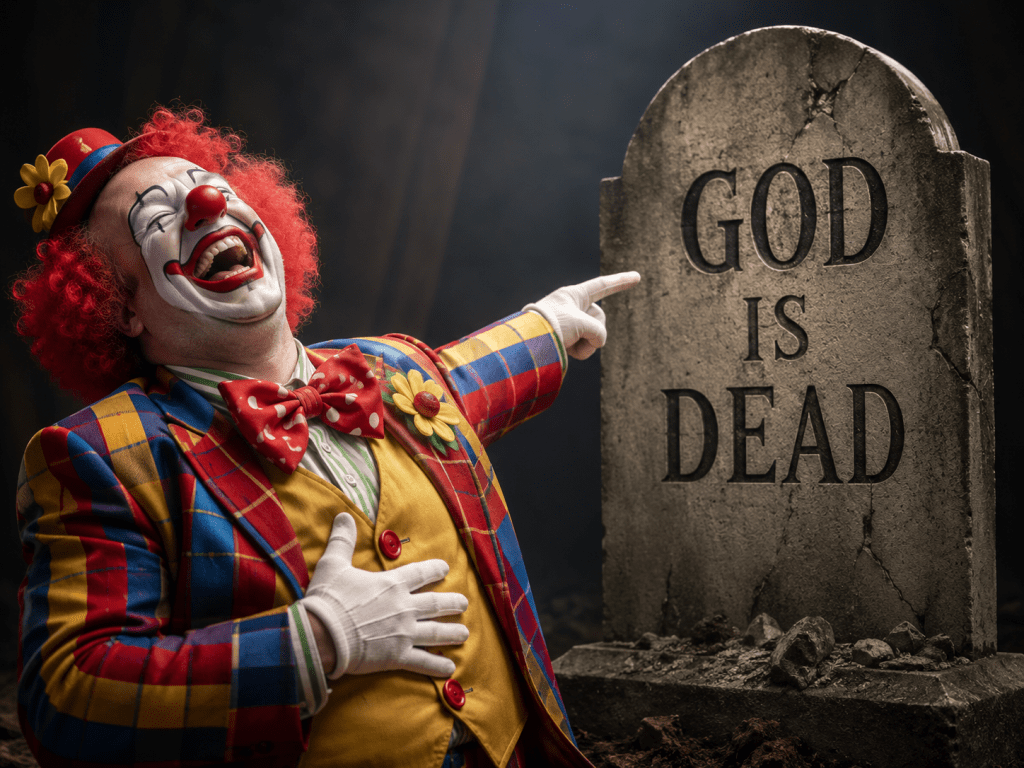
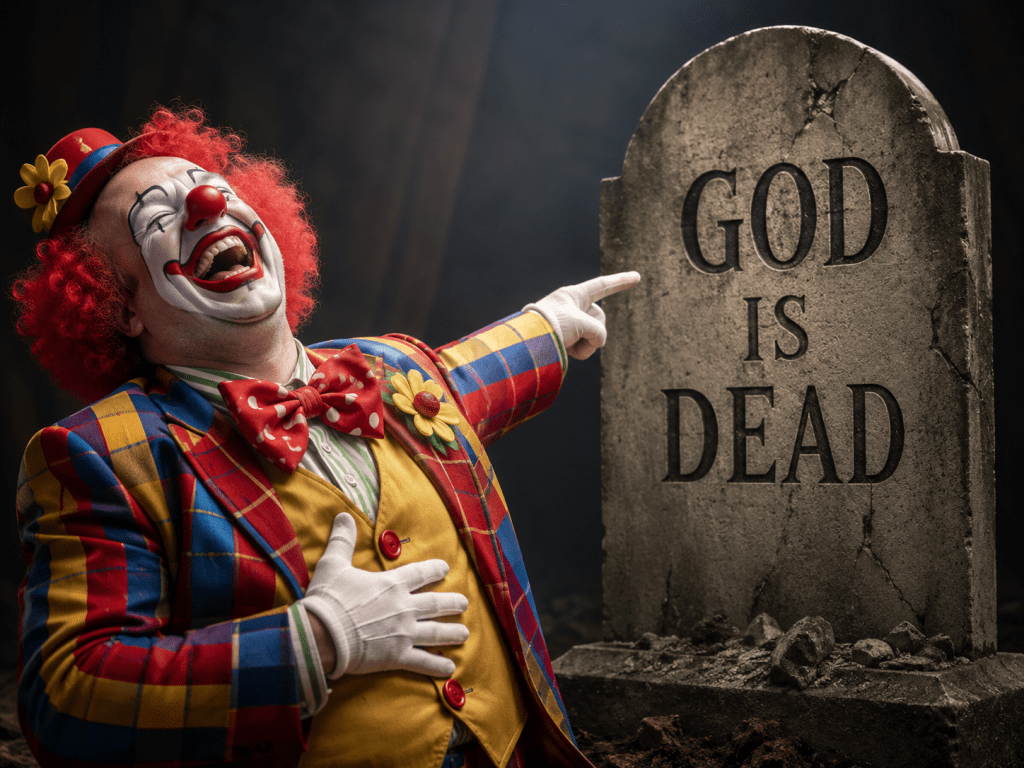
It was in 1882 when the phrase “God is dead” first appeared. It was in Fredrick Nietzsche’s book The Gay Science. Misunderstood by many, Nietzsche was not saying that God was literally dead.[1] He didn’t even believe in God so, from his perspective, a nonexistent entity couldn’t die. What Nietzsche was saying was that people’s belief in God, and their need for God, was dead. Thanks to the Enlightenment, the Scientific Revolution, the theory of Evolution and production of the Industrial Revolution, man was on the road to becoming Superman, all by himself.[2]
Eighty-four years later, on April 8, 1966, Time Magazine released an issue with the provocative title, “Is God Dead?” Once again, many misunderstood the question and the magazine was overwhelmed with 3500 letters opposing the idea on ontological[3] grounds. But the Time article wasn’t raising the question ontologically, but existentially.[4] Had society, even while claiming to believe in God, functionally done away with their need for him. Time was bringing up questions regarding the moral shift society was taking, along with its increased pursuit of material wealth. They were asking if Nietzsche’s 80-year-old prediction about society had come true.
It is not a coincidence that after Time’s article came out, a few years later Harvey Cox’s brilliant book The Feast of Fools was published – probably the most insightful response, that I know of, to the question of God’s death. In the book he diagnoses the problem as such:
The vivid cultural experience of God’s absence, disappearance, or death occurred in a civilization where festivity in all its forms was in a state of steady decline.[5]
Everyone knows in their own experience today how desperately harried our age has become. We know in our nerve cells as we rush from appointment to appointment that something is badly out of kilter. We feel responsible for so much that a certain desperation has set in.[6]
Preoccupied with producing and managing, we have lost touch with vast reaches of reality. Our being has been harrowed and depleted.[7]
Now let me bring this closer to home. When I look at the church in North America[8] and the many pastors I work with daily, I must ask the same question, “Is God Dead?” The reason I ask this is because, when I read Cox’s quote above, I can’t help seeing today’s churches and pastors. We seem plagued with the same cultural ideologies that crowd out God. Big is better, celebrity means status, political power alignments and in fighting, the plethora of programs, curriculum, influencers, podcasts, blogs[9], and exhausted churches, volunteers and pastors all trying to do God’s work for him. So, is God dead? Do we even need him?
Its too bad more church leaders haven’t listened to Cox, but have gone down the path of trying to answer Time with apologetic arguments for God’s existence, which was not the point, or is even relevant for most people.
Who cares if God exists!? Even if he does, what’s his relevance? When we look at Cox’s descriptions of our lives without God, the answer to that question should be obvious. Yet, here is the ironic part, why do the pastors and churches I know use the same strategies of overwork, busyness, overscheduling, always on, pursuit of success, to their own emptiness and exhaustion, to reach a world already dying of these things. And when we’ve arrived, by the world’s standard of success, God is still dead in our churches and ministries.[10]
I regularly ask tired pastors and church members in my classes, “Are you enjoying God?” “What’s the point if you are not even enjoying God?” As the Westminster Catechism starts, “What is the main purpose of our life?[11] Answer: “To glorify God and ENJOY him forever.” Or, as John Piper puts it (which I like even better), “To glorify God by enjoying him forever.” These are not two different things, but one – just as loving God and others is the greatest commandment (singular).
So, what are we supposed to do? Certainly, it is not continuing to try to reach the world by their own failed methods. What Cox proposes[12] is for the church to bring back play and festivity. Traditionally the church has always believed in holidays[13] and Sabbath[14]. Cox writes:
Festivity is not just a luxury in life. It provides the occasion for us to reestablish our proper relation to time, history and eternity. This is why only a rebirth of festivity can move us beyond the religious crisis we call the death of God.[15]
Perhaps when we have learned again to celebrate, we will look back on the experience of God’s death as merely the symptom of a cultural sickness – our worship of work and production, and our insensitivity to the mystery from which human history arises and toward which it inevitably flows.[16]
That’s an attractive witness to a world, and church, dying of anxiety and burnout. In festivity, unstructured play and rest is where relationships develop and deepen, both with God and others. The day after God created humans was a day of rest. We hardly had time to get tired working in the garden when, of first importance, God made space for relationship building, to enjoy him and one another. We also work with God and others better when we know each other. We are humans and not machines.
So, slow down. Do less. Be relational. Have fun. Play! Laugh! Touch grass.[17] You may then find God coming back to life. That’s who we all need. Not a busy religion where we feel responsible for everything[18] and guilty for never accomplishing everything, but an alive God who wants to enjoy us. We were created to glorify God by enjoying him forever. Notice the last word is “forever”.
Hell is boredom. Heaven is feasting.
[1] Nor was he saying anything about homosexual science.
[2] I realize that I am using all male pronouns in this sentence. That’s because that’s how Nietzsche wrote. I would have updated it, as Nietzsche means man in the generic sense of how 19th century writers used the term, but as he did not believe in women’s equal capability with men and saw them as fundamentally different and often inferior, so his “Superman” was certainly male. In section 6 of “Why I Write Such Excellent Books” (Nietzsche was known for his humility) he wrote, “From the beginning, nothing has been more alien, repugnant, and hostile to woman than truth—her great art is the lie, her highest concern is mere appearance and beauty. “
[3] I could have said, “regarding the belief in God’s existence”, but sometimes it is fun to use big words so that people realize I’m smart. (I pride myself on being as humble as Nietzsche).
[4] Impressive, I know. This word means something along the lines of “having to do with personal meaning,” but I find it a slippery term. In other words, the question Time was asking was, “Is God still relevant to the meaning of our life?”
[5] Cox, Harvey. The Feast of Fools. New York, NY: Harper, 1969, 27.
[6] Ibid, 31.
[7] Ibid, 43.
[8] Particularly the evangelical church. The tradition I am part of.
[9] Except for my blog.
[10] Michael Tait, formerly of Newsboys, used to belt out their song, “God’s Not Dead!” while admitting, after being caught, “I’ve been involved in reckless and destructive behavior, including drug and alcohol abuse and sexual activity.” In fact, his sexual activity involves cases of homosexual assault spanning decades while in his “ministry” as a singer. Ravi Zacharias also spent decades “proving” the existence of God while sexually assaulting women and lying about his academic credentials. Therefore, “What is the meaning of God for my life?” is a much more important question than, “Does God exist?”
[11] Yes, I updated “chief end” and “man”. That’s called talking how the people you talk to talk (which is what pastors and missionaries are called to do). It is not a slippery slope into wokeness.
[12] Here is where this serious reflection brings us back to our need for Ministry Jesters.
[13] Holy Days.
[14] Which means rest; not seriously busy (often boring) church stuff.
[15] Ibid.
[16] Ibid, 47.
[17] As one of my students likes to say.
[18] Even the responsibility of “proving” God’s existence.


Leave a comment