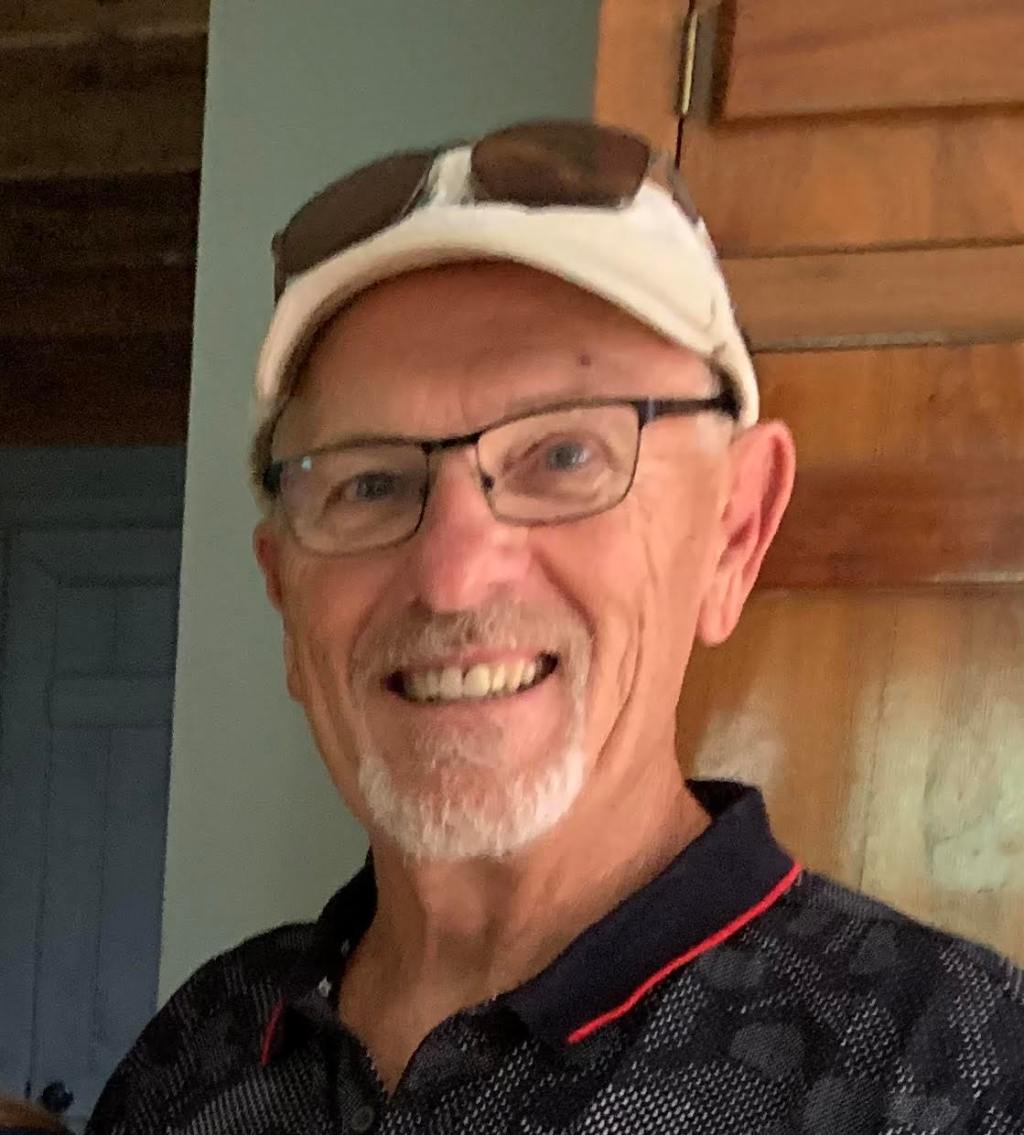
People Skills – Pastor Bob Shelton (Episode 8)
bible boundaries christianity church faith humor jesus leadership ministry pastors people skills preaching recreation rest Sabbath stress
Comments
16 responses to “People Skills – Pastor Bob Shelton (Episode 8)”
-
“We look at screens so much instead of looking at people’s eyes… everything flows on relationships.”
I appreciated this honest take from Bob Shelton. I honestly have enjoyed less and less the screen and really am wanting more and more of people time.
Churches must call families to healthy habits around phones, parents must set the pace around the dinner table and be an example for their kids.
We have to get away from being accessible 24/7. Remember our first work: we are spiritual people. It’s not to solve every problem. Sounds like Bob and shared this from lots of his own experience.
Number one people skill: listening. I truly think my problem with this is that I am not around people enough. Why do I feel that? Perhaps distance from ministry location, studies that are just online, a church that is not rooted in a location. Maybe I can make room for more people time and listening but it is hard without making a big change of house or career even.
I enjoy how Bob values relational connection. This is one of my favorite aspects, that he intentionally tries to communicate he is glad people are around.
Bobs answer to polarization was great. Especially when he talked about his Bow Valley experience. Steady hand and point people to Jesus. Appreciate how frank he was with that.
Then his thoughts about passion, made me want to direct my passion in a way that drives people to Jesus.
LikeLike
-
I am truly grateful to Pastor Bob Shelton and Dr. Piva for sharing such insightful content through today’s podcast.
First off, I really resonated with the part about the impact of digital devices. In today’s world, social media and smartphones have brought us convenience and information, but at the cost of declining interpersonal skills. It’s also true that many people end up feeling depressed or inadequate just by looking at the perfectly happy lives others post on social media. I was also surprised to learn that words only account for about 10% of the essence of communication. This podcast reminded me once again why I need to keep trying at ‘smartphone-detoxing’ something I’ve been struggling with lately and I’ve realized I need to set firm boundaries even with my phone.
When Pastor Bob spoke about the core skills needed for a pastor, I felt that listening is absolutely vital. I still vividly remember a pastor from my elementary school days. More than anything else, he truly understood, listened to, and empathized with the struggles of a young student. I gained so much strength from him, and he remains in my memory to this day. Following the empathetic listening my father has taught me since I was young, I want to become a pastor who truly listens and empathizes with others. I believe that when we listen like that, it naturally gives people a sense of value and respect.
Regarding the ‘Western vs. Eastern Shepherd’ models, while I believe every pastor has their own style, I felt strongly that I want to be a leader who leads from the front by example. Growing up, the pastors I respected most were always the ones who led by showing, not just telling. I remember a chaplain from my military service who managed so many soldiers, yet remembered every single one of us and cared for us like his own children. He was a true example for me.
Finally, what was said about ‘burnout prevention and rhythm’ really made me reflect on my own ministry direction, spiritual disciplines, and how to set healthy boundaries. Thank you once again for such a wonderful podcast.
LikeLike
-
Thank you Pastor Bob and Dr. Piva!
I really appreciated hearing this interview with reflections on trying to communicate in this (mostly) digital world. I think most Pastors are trying to figure out how to adapt, but also to really cut through the noise and serve their flock. As Pastor Bob mentioned, only 10% of communication is verbal, so this is a warning and reminder that a Pastor will need to find some kind of balance between serving from behind a keyboard, and serving in-person. Rejecting ALL digital communication for just strict in-person, is probably not going to help you help your flock as best you can, but neither is the other extreme of ALL digital and no in-person.
Some recent assigned readings in our class had a small bio of Pastor Ric Warren who was “there” during the explosion of the internet and email mailing lists, and used them to explosively grow (and serve) the church.
It reminds me that there needs to be this focus on really trying to know your flock and seeing what your people will respond to. Some relationships will flourish with more digital involvement, but others will likewise flourish with more personal contact.
Trying to stay “updated” on the lingo the youth are using today is TOUGH — but probably no more tough than when my parents tried to understand me during my youth years.
I try to keep updated with my daughter without (hopefully) sounding like I grew up during the horse and buggy days. But at the same time, I think a lot of youth are hungry to hear the truth within God’s Word, and learning to understand what the Gospel of Jesus means and how it applies to them.
My daughter would sit still for solid, honest teaching but would reject it if the Pastor (or Youth leader) tries to sound “hip with the kids” and use modern vernacular. Too many people in Youth today I feel go to that extreme where they “modernize” the Gospel with so much new lingo, that it totally cheapens it.
LikeLike
-
Great podcast on people skills in ministry! I enjoyed Ps. Bob’s take on boundaries and bridges with people. For me, the tension between the two has been the most difficult aspect about ministry. I mean, we are called to lead people but how can we do so if there are no deep relationship, trust, and commitment? What do I do when people try to persuade me into taking sides?
From the podcast, I learned an area I can work on for people skills is to be a better listener. I like it how Ps. Bob reminds us that we don’t listen just for the sake of listening, but to ask the right questions to connect better with people and for them to connect with God. I tend to talk more or want to fix people’s problems by giving solutions. But by listening and probing for big picture questions, I think it will help me surrender things to God instead of me trying to solve everything, as well as build bridges with people.
The second area is resilience. Ps. Bob stayed committed to his call to hold the helm and lead others to Jesus. His example provokes me to be firm in answering those who want me to follow another agenda. Since my other tendency is avoiding conflict, I must reshape my thinking and speak out when I need to.
LikeLike
-
I agree with Pastor Bob about the necessity of meeting with people as a priority for the pastor who desires to be effective. Sermons are important, and I love preaching, but the most effective moments in my ministry have all been across the table from people. Whether its evangelism, pastoral care, discipleship, or just catching up, these personal and incarnational moments are vital. Of course, I have some learned behaviours and sort of default settings that often make these challenging to engage with. It is easy to just stare at my phone, or to engage with my ministry at a distance rather than face the reality of being WITH people. But I am completely convinced that a pastor who does not emphasize personal ministry alongside their other roles, that I are missing a vast majority of what being a pastor is all about.
I also liked how the podcast discussed how intentionally disconnecting from our phones can be a challenge to our ego. Many pastors, myself included, I think want to be that enthusiastic pastor who can answer questions and just generally be available all the time. But that is not a good pattern to demonstrate, because not only does it create an unhealthy standard, but it also reinforces negative tendencies to be Jesus FOR people. With that in mind, Pastor Bob really emphasized the better pattern of intentional listening, rather than a shallow appearance of listening via text or general availability.
LikeLike
-
I really enjoyed the conversation on people skills with Pastor Bob.
Two points in the conversation especially stood out to me. The first was that listening is the number one skill for a pastor to have. This can be particularly challenging in the technological age, as we have become disconnected from our immediate surroundings because we are so connected to the rest of the world. The challenge to put the phone aside and truly get to know the sheep you pastor—knowing them by name and understanding what they are going through—builds trust and confidence. From that place of trust, a pastor can begin to lead people into a deeper relationship with Jesus.
This was definitely a challenge for me personally. Although I have become more strict with my phone over the last couple of years, I still struggle with overuse. The silly material object is always on my person! My challenge for myself this week is to take a physical Bible with me to church and leave my phone either at home or in the car so that I can be fully present. I would like to track how many meaningful interactions I have when I remove that distraction.
I also really appreciated the challenge to use the kitchen table as a place to learn and model people skills. This is an area that my wife and I have not really utilized, as our house is often quite chaotic with our five small children. However, it is something we can revisit and prayerfully consider. Adopting more of an open-house lifestyle—welcoming our children’s friends and our neighbours into our home—could be a meaningful way to practice hospitality and build relationships.
LikeLike
-
This episode has so much overlap with a lot of my other courses, but I’ll begin with listening skills. We can hear things passively, but listening is an active process. There are many obstacles that need to be bulldozed before active listening can take place. For example, when we have our faces glued to the phone screen, the lack of physical presence is definitely a barrier. Another obstacle is preunderstanding, like personal biases and assumptions. Just like reading the Bible requires inductive reasoning first, we also need to listen to people with the same inductive reasoning. Polarization is also another obstacle, but it’s not something that we can actively resolve on our end.
Next is building relationships. In my other biblical counselling class, it takes effort to entering to people’s suffering to build relationship with them, and that has been a challenge for me personally because I have this attitude of superiority and I am not willing to humble myself, but I learned that humility is the first step of building relationships. On a side note, relational health is just as important as physical, mental and spiritual health, because they are all integrated.
I do wonder why there’s no mention of the disc model of personality in this interview though.
LikeLike
-
I just remembered that when kids started owning mobile phones in 2000, the classes would start with all the phones being surrendered to our teacher. And that was during a time when mobile phones were not yet the smart phones we have today that has 50 apps that we use for different things. If they were distracting then, they are definitely more distracting for students now. They have made it so useful that we have been depending on it for so many things everyday.
We recently moved to an apartment, and I have had to add two new apps to my phone. One enables me to open the main entrance to the building and answer the intercom. The other app enables me to control the temperature in the unit remotely and even lock/unlock our door. It has made things very convenient. When I get out of the building, I need to make sure I either have the actual key with me, or have my phone with me. Can I do without my phone for these? Yes definitely. But it’s less convenient. Having mentioned these, I still believe we should be able to put down our phones or even leave it in the next room for a few hours each day and not have to check it from time to time. We have lived without it before, it will not kill us to put it down every now and then.
Listening to this podcast, I realize that with people skills, it’s good to keep in mind that the aim is to get to know and understand people and to let them know and feel that we care. There’s so many skills we can learn and be better at, but knowing what our aim is helps guide what we do. If we wanted to trulyt understand people, we will ask better questions, watch out for non-verbal cues, go out of our way to greet them, be curious where they are coming from, etc.
LikeLike
-
I think the theme that I had repeated in this interview was one of culture. Why is it that we struggle to relate to one another? Why is it that the modern pastor does not make visitations a priority? The answer to some degree is our culture of relationships. How Pastor Shelton put it was that he aspires to build a culture, of building bridges.
The struggle with this sort of cultural building is that it takes a great deal of time and effort. We know how we want to be, but do not know how to get there. Pastors are well positioned to spearhead this improvement. Men who are dedicated to the advance of the Gospel, by necessity, have to build relationships. Therefore it is in our best interest, as well as the flocks, that we learn and example positive people skills. Dr. Piva captured this when he asked along the lines of: if a fellow can’t learn people skills should he even be in the ministry at all?
I reflect on my own upbringing. Being a hermit by nature I did not have a lot of positive examples as how to navigate people. Yet by God’s grace He put a number of positive influences in my life that shepherded me along the way. Through them I learned paitence and listening – which Pastor Shelton noted appropriatly. As a result I am much less of a mess with others than I might have been. Let us go and do likewise for someone else. In time we will reap the reward.
LikeLike
-
The interview with Pastor Bob Shelton highlights how ministry ultimately rises or falls on relationships and our ability to genuinely connect with people. In a culture shaped by what many call an “anxious generation,” largely influenced by constant phone use, his reminder to step back from 24/7 accessibility feels especially important. I resonate with the struggle of setting boundaries with my phone. When I intentionally stay away from it, I notice I can connect with people more deeply. While phones help us stay connected over distance, they can also block real and genuine connection with those who are physically present. This is something I want to grow in.
His focus on people skills, especially listening and asking meaningful questions, stood out to me. Rather than trying to fix people, he encourages knowing them personally, calling them by name, and walking with them in their life moments. I was especially impacted by the idea of inviting people into our lives, like sharing meals.
Personally, his honesty about burnout was convicting. It reminded me that trying to carry everything alone is unsustainable. I need to learn rhythms of rest, solitude, and dependence on others.
LikeLike
-
I heavily related to the sharing about being pulled to different sides of more polarizing topics but still remaining focused on Jesus as the goal.
Recently, our church has had a heavy influx of young adults who are from a Korean background and it has caused a drastic shift in our young adult group culture and what our Sunday service looks like.
The greatest struggle for me has been navigating what is Korean culture, Canadian culture and what is biblical and true. Rather than focusing on adapting to culture, I wrestled with navigating these changes with a biblical perspective. I don’t want to be drawn to a certain culture or focus too much on it when the important goal is to create a Christ-centred community that will both help challenge and nurture each of the members.
The podcast was a reminder for me again that we cannot be swayed by every external factor but focus on being “a steady hand at the helm” and “focus on Jesus” in these times.
LikeLike
-
In the interview with Pastor Bob, one highlight is the comparison of how shepherds in the West compare to the East. In the West, the shepherds or ranchers drive their sheep from the back into a pen. In the East (or in biblical examples), shepherds are found at the front, leading and guiding the sheep to where the shepherd wants them to go. In John 10:27, Jesus says “my sheep hear my voice, and I know them, and they follow me.” It is the image of guiding sheep with his voice from the front of the flock.
When it comes to people skills, I also had to learn to listen rather than to talk or feel the need to give people a solution. It is not always necessary to immediately correct a person’s theology. In many situations I have experienced, it is through asking the right questions and guiding a person through that thinking process that they are able to come to a biblical answer and understanding. Perhaps they may reject the conclusion but still acknowledge the truth in it, and it sits with them.
LikeLike
-
Thanks Dr.Piva, for this podcast and for asking some relevant questions related to the contemporary challenges of ministry. It is a clean observation that most Christians have become just Sunday Christians. In many cases, as you mentioned, they do not want to invite their pastors. Another observation, which is so accurate and demands some scrutiny, is the inhospitable nature of the Christians.
I see it as a problem being integrated into the culture, which has evolved massively. I totally relate with the idea of screen free culture with the church. Even in my church we have always encouraged the youngsters to minimize the use of phones in the church as it is affecting their relationships with their own families.
I like the analogy of the Eastern Shepherd and the Western shepherd. Coming from the very eastern culture i can totally relate to it because in my culture we the ministers are supposed to be the leaders who are responsible to lead the parishes by example.
LikeLike
-
It was a pleasure to have Pastor Bob interviewed by Dr. Piva. Pastor Bob gave me helpful insight into a pastor’s people skills. I have yet to hear a story of “phones over souls.” As both of these gentlemen advocate for souls over phones, I hope to become a church planter who spends time both in coffee shops and at dinner tables with invited guests.
I remember the countless invitations from church members, laypeople and pastors alike, that drew me closer to God, especially at dinner tables. True rest lies in the beauty of shared meals. These days, I struggle to eat with my toddlers, as they can be messy. I hope to be an eastern shepherd, present among people, influencing rather than forcing the flock onto a pen.
As the West becomes increasingly polarized, future pastors should recognize the rise of overt and unfair criticism and find solitude in God as their refuge. God, I pray that I may notice more relational opportunities and take initiative to listen and ask questions, rather than merely talk over unhealthy dichotomous arguments.
LikeLike
-
Thank you, Pastor Rob and Dr.Piva, for discussing the topic of people skills.
I like how you highlighted the need for listening to be a skill that the pastor has, and that communication is what shapes a ministry. Also, our job is not to be the “Bible answer man” but to ask meaningful questions and simply be there for people.
I liked the idea of putting the phones away when the church comes together in whatever format to focus on actual in-person attention and communication. I know of churches that are doing this, and I know a lot of schools are actually beginning to ban phones in schools. Hopefully, this will help with people skills growing in general down the road.
In my experience, I have definitely improved with my ability to listen and communicate with others, but I also have a ways to go. I tend to avoid doing these things, but I have found that listening and communicating as a part of people skills grows easier with time and is a real blessing.
LikeLike
-
Thanks for this sharing from Pastor Bob Shelton and Dr. Piva. It really summarises so much of what I’ve learnt over these recent years of ministry.
I love the idea of having a phone‑free church and youth group where people can focus on the moment. Sometimes we simply need to break through the old norm in order to rebuild a new one. Because if we are “accessible” 24/7, we are actually not fully present with the people in front of us. Stopping the habit of feeding the ego of feeling omniscient or needed as if we were omnipotent helps us become more attentive and vulnerable, so that we can bear one another and grow together.Another thing I learnt from previous ministry is the importance of not giving the “correct answer” but instead asking powerful questions. People tend to own their realisations more deeply than when they only receive advice. This also reminds me of when Jesus asked the blind man what he wanted Him to do for him (Mark 10:51), echoing Pastor Bob’s point about listening and asking, “How can I help?” People want to be seen and heard—they want to know they are significant. I’ve personally experienced this with my dear friend, who really looks into my eyes with active and reflective listening (the kind we read about in textbook), making me feel heard and valued.
Third, I’ve realised how important recreation and rest are in personal life, because I am so much like the people Pastor Bob describes – those who have lost the ability to be still. Times of relaxation can become gentle opportunities to connect with others and can create more space for us to become joyful and fun people. This also reflects the Eastern shepherd, who leads by example and knows the sheep by name through these softer interactions, in contrast to the Western shepherd who tends to be more distant from the flock.
LikeLike


 Stef Piva
Leave a reply to Gene Cancel reply