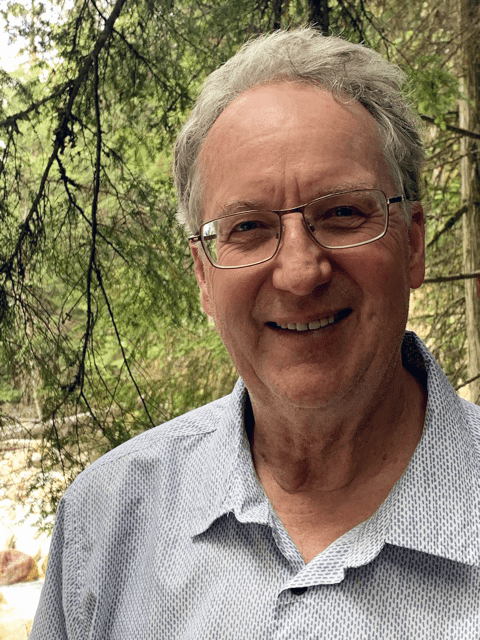
ReCreation – Pastor Rick Bergh (Episode 7)
christianity jesus bible faith church pastors ministry preaching humor stress boundaries recreation rest Sabbath
Comments
18 responses to “ReCreation – Pastor Rick Bergh (Episode 7)”
-
I like how the topic of boundaries from the last podcast was brought up when talking about rest. Pastor Rick mentioned how every pastor should set good ministry boundaries to have good rest, and this is something important in the role of any pastor. There can be so many needs in the church, and some may expect that the pastor to be on call for emergencies. If the pastor is expected to answer every beck and call of one’s congregants, the life of the pastor would probably deteriorate very quickly.
Another key point that was addressed is how working incessantly does not necessarily lead to good and productive work. Without rest even during a workday, one can end up wearing down and have productivity come to a halt. For me personally, I would liken this to exercise where even in an exercise circuit or routine, there are sets and rest periods built in between some of these activities so that the body and recuperate before going at it again. That is something I need to better implement in the way I work as well.
LikeLike
-
This conversation about recreation really resonated with me. As a co-vocational ministry leader, my days and evenings can be very full, before I set healthier boundaries around rest I would use a similar excuse to Pastor Rick, ‘if I have the energy to keep going, I usually do.’
However, over the past three years I’ve realized that having the energy to continue doesn’t always mean I should.I’ve intentionally set some boundaries around rest. I stop working at 9pm—except for Tuesday evenings as I have an evening class —and begin to wind down through reading, working out, creating art, watching TV, or simply talking through the day with my wife. This intentional transition helps me shift from productivity to true rest. I’ve also begun taking Saturday mornings completely off, which has created more space for family time and has helped me maintain a healthier, more sustainable pace in both ministry and life.
These practices have reminded me that rest isn’t weakness—it’s sharpening my axe.
LikeLike
-
Thanks for sharing your thoughts and experience Pastor Bergh!
I found it to be a greatly timed podcast episode, coming hot off the heels of the “Boundaries” discussion. Pastor Rick highlighted pretty quickly that in ORDER to rest, he needed to establish some really clear boundaries. While the Pastor is called to be a servant, there is definitely some needed boundaries to ensure that the Pastor keeps his axe sharp for the defense (and health) of his entire flock.
When I was back in my college days and starting out in the world of tech, my common attitude was one of “You can sleep when you’re dead.” I did often consider those who would not be working on their own side projects or businesses during the weekend, to be lazy. My sleep schedule was often terrible, always trying to work on a tech idea or squeeze in “just 30 minutes” of something else.
From time to time, I would definitely just crash and sleep for an entire weekend, but then would feel so guilty that I would double-down during the next week.
I look back at that now, and I can say with 1000% confidence that my “net productivity” on anything I tackled was abysmal. Hindsight is always 20/20. At the time I felt productive because I was constantly doing something. Movement = Progress.
LikeLike
-
I greatly related with Pastor Rick on many of things that he has shared during the interview. The part that stood out most to me was on the question of excuses he would find to not find the time to rest or re-creation. Whether it was the urgency of the ministry or the remaining time he may have to serve ministry, he shared of the urgency of time he felt where resting almost felt like “wasting time.”
This has been an ongoing struggle for me where I struggle to just stay idle. Rest time often really did feel “irresponsible for me” but in the past few weeks, I’ve been learning more and more that proper rest is crucial. So yesterday, I met up with an old friend who came up with Seattle and planned to meet with his friend group to help tour them around the city and enjoy a good time with my old friend.
Earlier in the week, I had made a huge checklist of the things I wanted to get done this weekend and I was initially planning to leave early. But after spending time with them, I lost track of time and ended up spending the entire day with this group. At first, I felt guilty that I could not do the work I planned for myself. But soon after, I realized I haven’t had a day like this to just be with friends, laugh and enjoy their company. I soon realized that this was the best way I could have spent my Saturday, resting in the company of good friends.
LikeLike
-
Thanks for sharing, Ps. Rick! I found that part on how to wind down before sleeping helpful. I typically have more energy in the morning so that’s when I able to focus more on Scripture, meditation, and singing in the spirit. Evenings are more challenging, but the ironic thing is that filling my mind with the wrong things actually makes me more restless. A leader from my church introduced me to Compline prayer, which was new for me. I tried it out, and over time found that it would fill me with peace. It wasn’t easy but it was changing my habits and the way I would decompress after a busy day.
I appreciate the wisdom regarding cell phones and computers as well. There should be boundaries on when and how long I should use my computer and phone throughout the day. I’m still figuring out how to steward technology well because as distracting as phones and computers can be, I find them to be helpful in keeping me connected with others. But as Ps. Rick said, there are the types of texts that are trivial and time wasting. I get those as well but I just chose to ignore responding to them, especially if it’s political in nature. Eventually, the wasteful texts stop coming and the senders begin texting more pertinent matters.
LikeLike
-
Enjoyed listening to this interview and getting a lot of practical tips in the aspect of rest and recreation. I noticed how closely tied it is to having boundaries. Saying “yes” to rest means saying “no” to other things and there is a lot to be gained also in protecting this aspect of our lives.
As a listened, I am reminded that rest is not only physical. Yes, it is refraining from working and making sure we get enough sleep, but it is also pursuing things that bring you joy – things that refresh and renew us. I love how Pastor Bergh mentioned both rest and exercise as two things that helped him be fit. The past weeks I have been challenging myself to go to the pool and do laps 2-3 times a week. I missed one alst week and thought of doing another one yesterday (Sunday morning). At first I thought it was going to be a bad idea considering the long day ahead. Up until the last minute I was still thinking of not going through with it especially that it was too early in the morning to be going out on a really cold day! But I went and did it. To my surprise I had way more energy for the whole day and felt really good. Now, I’m considering doing it more regularly on the weekends! I think another lesson for me is to be more experimental and try activities I don’t usually do and see what effect it will bring. Half the battle sometimes is getting myself out of the house. HA!
LikeLike
-
I am working towards what Pastor Berge advocates: to be physically capable, we need to be physically fit. When Pastor Berge mentioned daily rest and Dr. Piva referred again to the story of sharpening the axe, I was reminded of something I once read about the effectiveness of the Tabata Protocol, in which a 20-seconds intensive training followed by 10 seconds of rest, repeated for eight rounds. In just four minutes, it can significantly improve performance.
Rest is crucial, not only for our bodies to reset and recover, or to enjoy God’s created reality, but also to honour the boundaries God has established. It humbles us and guards against idolising busyness, and is an act of trust in Him, similar to the Israelites needs to learn to trust His provision in the wilderness.
Pastor Berge also reminded me that what we consume before sleep matters. Therefore, cutting down busyness and avoiding internet scrolling before bed is a practical first step in changing my routine. We often excuse neglecting our own needs in the name of seemingly spiritual reasons, forgetting that our health and family are also central parts of our calling. This podcast reassures me that while God’s Kingdom work is urgent, so too are our health and longevity – so that we may work wisely, not merely work longer but exhausted and non-effective.
LikeLike
-
BTW Pastor Berge’s schedule is really mad! Yet the ending sort of reminding us sometimes what we did can be so in vain that we could just enjoy so short! so Enjoy more instead of overwhelmed by the busyness!
LikeLike
-
I loved how Bergh touched on a lot of other points like boundaries, burnout and stress management, because the topic of recreation needs to be based on these other topics. For example, if you can’t say no to work (which is a boundary issue), there would be no time for recreation. Same thing with how recreation can be abused to create more stress, like turning a fun sport into a serious competition.
I personally resonated with two things Bergh talked about. The first is his dry eye syndrome which eventually cracked open his cornea. While I have no issues with my eyesight other than the need for glasses, I have witness firsthand how my father suffered eye problem like his own dry eye syndrome and detached retina which is peeling off from both of his eyes. Everyone around him, myself included, urged him to take time off to rest because it might be God sending him a sign that he actually needs rest to protect his eyes. However, he instead responded by saying that he doesn’t have much time left to use his eyes, so he interprets it as a sign that God wants him to work harder. I don’t know how to help him now, but at the very least I can take it as a reminder so that I don’t repeat his mistake.
My second point is the controlling the screen time on my phone. I joking call myself the founder of an organization called Citizens Raging Against Phones, or CRAP for short. Smartphones are meant to boost our productivity because it can do so much more things than simply making phone calls, but the question remains: Do we actually need that amount of productivity in our pocket? Increased productivity also leads to increased distractions because now we can’t distinguish what’s real work and what’s just an endless stream of distractions.
I believe that good recreation should involve touching grass. Maybe not literally, but at least we have to touch grass metaphorically. What I mean by that is that we need to find connections with things. Grass represents nature, which is a good place to be, but there are other things that we can get in touch with, like people. We have neglected the importance of playing with people in the physical space. The reason I have so many trading card games is because I enjoy physical presence over video games on a screen. Ultimately, we also need to get in touch with God. Relationships with people and nature should point our eyes toward God who gave us all these amazing ways to rest. True Sabbath is a person, and that person is Jesus.
LikeLike
-
I would like to express my gratitude to Pastor Rick Bergh and Dr. Piva for sharing such great content through this podcast today.
After listening to today’s talk, I think I have once again realized how I should set ministerial, emotional, and relational boundaries in my ministry and how to properly say “no” when receiving requests. In particular, as Pastor Rick Bergh mentioned, I felt that I must develop the ability to discern work rather than reacting immediately to every calling when setting priorities. This also reminded me of the priority indicators by Stephen Covey in the four-quadrant matrix that I learned about in class.
While these contents were all excellent, I especially resonated with the explanation regarding “re-creation”. This brought to mind my own personal spiritual disciplines, such as having a set time for Quiet Time (QT), praying for at least 10 minutes in my own space before going to the gym, and my practice of reading five chapters of the Bible every day before writing in my journal. I truly empathized with how important those disciplines are.
Also, from the “Sharpening the axe” illustration you shared, I learned that checking the state of my tools and the blade is just as important as working hard to chop down trees. I believe the sleep and routines mentioned toward the end are incredibly crucial. To share my own story, although I am currently working hard to maintain a routine, there was a time when I just lived day-to-day as things happened. When I didn’t have this routine, my sleep and wake-up times were completely random, so I was always in a state of fatigue whether it was work or my life of faith. Naturally, because I was so tired, sleep felt more important than spiritual training.
Now, I am focusing a lot on keeping my mind clear and clean so that I can concentrate more on God. Since I am currently a student and taking a break from work, I feel there is also God’s grace and realization that comes from resting while studying. Lastly, I believe digital detox is something absolutely essential in this day and age. To put this into practice, I will try to spend two hours without my phone after waking up and attending classes tomorrow morning.
Thank you once again.
LikeLike
-
Pastor Bergh was an excellent and thoughtful guest. I very much resonated with his statements around rest being as much about taking something away, something that perhaps is “squishing us,” as it is about adding something. This reinforces his alter statement that there is a great value to saying no and discernment, and that we should approach ministry from a “priority perspective.” If a pastor or minster is not spending time at rest, and they are not delighting in the presence of the Lord, they will not be able to minster effectively.
Finally, I appreciated the conversation around phones. Particularly, while I have not experienced the exact sort of example Pastor Bergh referred to, the mortifying feeling of having your phone ruing during a sensitive visit, it is something I fear! So, as Pastor Bergh suggested, it is important that we set an example in that space, therefore I have my own ritual when I go to a hospital for a visit: I tell my wife I’ll be away from my phone, and I turn it off. I make sure I’ve got my Bible and that I carry it inside, instead of my phone. This also helps unit clerks and nurses to also understand my purpose there, along with my Religious Community Visitor badge. And lastly, before leaving the car, because the adrenaline of making an emergency visit can rob you of a moment to center yourself on Christ, I make sure I pray before leaving the car to go inside.
LikeLike
-
From the conversation, I liked several comments that were made, especially around drivenness, and sleep.
For drivenness, I think it is an excellent way to moderate our zeal with what Pastor Bergh said. Knowing that we only have so many years left, we will have to choose what we want to do. We can, if we wish, blaze like a bonfire for a few years, or we can take a nap and serve for an extra 20 years. I am not against considering that very occasionally: the former might be the right choice. For the vast majority of us however the long game is what God would have us view. The question when put this way is not that difficult. We make the same decision for our cars with nary an extra thought.
As for sleep, I like the Pastor’s comments about tuning the final hours of his day. He cuts down on phones and computers as much as he can. I have begun to practice the same. Sometimes the path to better health is as simple as Pastor Bergh suggests, eliminate the unhelpful things. One can schedule around them, so they have less of a chance to influence you.
It is for this reason that it is my common practice during Lent to cut down to almost nothing all of my screen related pass times. Games, movies, videos, the whole lot get cut down. I’m forced then to amuse myself in the middle periods of the day with other things. It is surprisingly difficult to do. The difficulty however is itself a confession how much I am influnced by such things.
LikeLike
-
In the interview, Pastor Rick Bergh explains that rest is not simply removing activities from our schedule, but doing things that truly refresh and bring joy. Recreation can be active and life-giving, not just passive or doing nothing. His perspective connects with the importance of boundaries, especially the boundaries we set for ourselves.
In ministry, we often excuse not resting by saying we are young and have enough energy. We try to stay constantly available, thinking it is faithfulness. However, this mindset can easily lead to burnout.
Personally, I often feel guilty when I rest, so I keep myself busy and productive. Even my hobbies are usually focused on self-improvement, like running to prepare for a race or reading to gain knowledge. I rarely choose activities simply for joy. This interview challenges me to consider having something just for myself to enjoy, without turning it into another goal to achieve. Learning to rest well and set personal boundaries is something I truly need to grow in for long-term, healthy ministry.
LikeLike
-
Thank you for sharing your insights and experience pastor Bergh. I liked how you mentioned that rest or recreation is not what we can add in, but what we can take out. I also liked your advice on keeping computers off and phones away along with avoiding pointless conversations over email or text.
Also, your funny story at the end is a good reminder that we can become overly busy with things that we later realize didn’t matter or were a waste of time. Being busy does not mean we are being productive.
Recently I have been cutting things out to give myself and space for recreation and have benefited significantly. I thought the comment was interesting that mentioned a movement among young people towards Catholicism with one of the reasons being it forces them to have breaks in their lives to connect with God. I know a fair number of guys my age back home that went to Orthodoxy because of this, and I must say I can understand the draw from the aspect of rest and quietness.
LikeLike
-
Thanks Dr. Piva for the relevant questions. Pastor Bergh is a seasoned minister, which is reflective in his responses to the questions.
I admire that he has been into sports most of his life, giving importance to the physical fitness required in the ministry. Along side he has mentioned setting boundaries around, be it relational or be it ministerial, and be able to say NO.
I also admire his disciplined lifestyle, especially in terms of praying and spending time with God, which motivates me personally because right i am going through a time of transition
Something that I have applied in my life is prioritizing rest and recreation. And since I have just started doing what many seasoned ministers have been doing for years, it has benefited me in many ways as I can notice some positive changes in me, and all I can admit today is that I’ve been missing a lot.
LikeLike
-
Pastor Rick had to raise four children! What a brave marriage. I have three children and feel on the verge of breaking.
As much as a young Pastor Rick wanted to be a good parishioner and a good father, he emphasized the importance of physical exercise. His sport was hockey; mine is soccer. He shared how being on the field gave him a sense of “being one of the guys.” When I play soccer, I feel the same way. There is joy and laughter, but also a sense of serenity away from family and work life.
The course, the chapter, and this podcast all point to the necessity and importance of the Sabbath as God designed it. The Sabbath must be given priority. I was challenged by the example of Muslims stopping in the middle of the day to pray. How much more should Christians pause in the middle of the week to give time to God?
One thing I could practice right away would be to set a schedule before bedtime and designate time for small catechism or prayer, just as the pastor suggested. This would benefit both my wife and my sleep.
Thank you,
SungLikeLike
-
Hearing Pastor Rick share how he was intense and hard working as a leader got me more curious as to how he would rest.
The taking away of unneeded things to be able to add enjoyable things is great.
The recognition of need for boundaries and saying “no” stuck with me. Asking the “priority” question was good. Interesting how he saw himself as a “crises” minister. I wonder how he handles that in a healthy manner because I have heard only ministering in crises can be hard.
The story of the cornea being torn was quite interesting. His struggle to rest was incredible to listen to. I would hate that so it was interesting how it went from a first day of not resting well to two days listening to God that blessed him.
I have no idea how I would cope with eyes closed, all day long. Even while eating, showering, or trying to play the Bible app on my phone. Incredible.
Caught my attention when he mentioned the last things you do before going to bed are important. That him and his wife realized what they do before bed interferes with sleep. My wife and I have a simple routine, but I see now it is not always mindful about how it affects our sleep. I want to read more and be off of our phone, that is still a work in progress. I wish I could ask how long it took for them to value rest!
How strong is my call? Strong enough for me to never run from it? I think that is true. Never considered that.
LikeLike
-
I really enjoyed this episode of the podcast.
One of the things that stood out to me from this podcast was how closely recreation is tied to boundaries and ultimately to trust. It is easy to think of rest as optional, something to get to after everything else is done. But as Pastor Rick pointed out, without intentional boundaries, rest never actually happens. That idea connected with me, especially in the context of ministry. In leading university Bible studies, I often feel the tension between being available and being sustainable. Students reach out with real questions and struggles, and part of me wants to always be accessible. But I am starting to realize that constantly filling every gap with ministry is not the same as faithfulness. It can actually lead to a kind of drivenness that slowly drains joy and clarity. The point about eliminating unhelpful habits before adding better ones also stood out. I have noticed how easily late-night phone use affects both my sleep and my ability to be present the next day. Small changes there have a bigger impact than I expected. What challenged me most was the long-term perspective. The choice is not just between working hard and resting, but between burning out quickly or serving faithfully over time. Recreation is not wasted time. It is part of how God sustains us for the work He has called us to.
LikeLike


 Stef Piva
Leave a comment