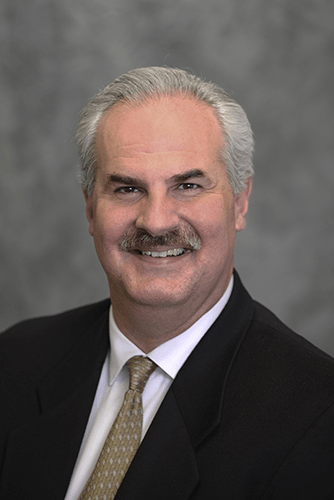
Calling – Interview with Dr. Rob Blackaby (Episode 4)
Comments
18 responses to “Calling – Interview with Dr. Rob Blackaby (Episode 4)”
-
The part that stood out to me was the aspect of community input through the significant decisions he made during his time in ministry. There were spiritual leaders and church members who were a part of his initial call to ministry, calling to be a pastor and transitioning to a different calling.
I see this as so crucial because in modern society, people value community and their input less and less. In an era where individualism is commonplace, having that communal aspect is crucial as God’s design for the church and ministry was one to be done communally.
In every step of ministry, from serving youth group in high school, going to Egypt for missions trip and now serving at uVillage Church, the conversation started almost every time not from my initial interest but someone like my parents, my mentor or my pastor approaching me. Even my current job working as an Educational Assistant at Vancouver Christian School was one that I never imagined but discovered through my close friends and mentor. The community aspect cannot be neglected in discerning our calling.
LikeLike
-
I agree with Blackaby that the identity is at the root of the issue. A misplaced identity has a one to one relationship with false callings. There are two types of false callings: False positive and false negative. Both are bad, but both are avoidable.
The false positive calling is like treating the church like a secular organization and being the pastor is like the CEO of a corporation. The issue with the identity here is that we put our identity on our role, performance and approval. These things actually come and go, like Blackaby said that he couldn’t be a pastor 24/7 around the clock, and we can’t please everybody in the church. The only thing that doesn’t come and go is our identity as children of God, and any other motive than inviting more people into the adoption needs to be seriously questioned.
On the other hand, there is also the false negative calling. It’s when you feel like dirt when you’re criticized or discouraged. You start doubting yourself if God had really called you into ministry. The story of Jonah and the Whale is an extreme example of this. He had an expectation of God and he abandons his mission because God’s calling didn’t meet that expectation. Many of us have this expectation that God should meet, like explosive church growth or a sudden revival, only to find out the opposite is happening. A house built on stone and a sand castle may look the same when there’s no storm, but when the storm does come, the identity at the foundation makes a huge difference.
Before I started classes at this seminary, I told Prof. Peacock that I wanted to be a pastor because a pastor is always at the center of the stage and just generally a popular person in the church. Peacock immediately realized that there was an issue even though he couldn’t put his peacock feathers on it at that time. Toward the end of last year, I realized that I had twisted God’s calling into a self-centered false calling. The reason behind it was my misplaced identity. Sometimes it takes a thorn in the flesh, which for me was my constant feeling of inferiority, to realign my identity so now I can hear God’s calling clearly. It also shows that a misplaced identity can distort God’s calling like those funhouse mirrors at a circus so that what comes out of it is a completely different message.
LikeLike
-
Aside from God’s Word, the church really does play a part in confirming one’s calling. I’m grateful to God for our local church who discipled me and journeyed with me through the years. My mentors in our church not only served as models but also encouraged me to serve in the ministry and exercise my gifts. They also guided me as I exercised leadership in the ministry. I believe that helped me a lot in growing my love and passion to serve the church. I’m also thankful for affirmations from people who know me and have walked with me for years. I can remember a time when a co-worker in the ministry went out of her way to affirm me of a particular gifting. At first I was surprised but as I looked back I realized I have been doing the work for quite some time and I’ve just been grateful to serve in whatever capacity. That encouraged me as well to exercise that gift more to get better at it. The church, especially those people that journey closely with us are the best people to tell us and confirm God’s movement in our life. What a gift the community of God is!
LikeLike
-
Thank you, Dr. Blackaby for sharing your journey. I like what was said about doubting in specific settings and assignments, and what helped sustained Dr. Blackaby during those seasons. Personally, I find the initial affirmation of my calling from others easier to navigate. God used three separate people in my workplace a few years back to prompt me to attend seminary and now graduation is just around the corner. It was during my program, however, that I found difficult because there were huge changes brought on by COVID-19, as well as doubts about where I am in life. However, one professor gave a “spanking” exhortation to our class one day. He said, “If God called you here to seminary, you can’t quit!” I think that phrase served as a constant reminder to keep plowing through my insecurities. Having such godly counsel from spiritual leaders or church elders is necessary because there well be those seasons of change and new assignments. Dr. Blackaby correctly pointed out that there is a potential for someone shifting their ministry assignment in order to escape the discomfort. I recently had to seek advice from my mentor and other leaders about my trajectory into a ministry field that is neither full time pastoring or missions but something in between. I had to be in check with the body of Christ, which is an integral part to my calling.
LikeLike
-
Thank you Dr. Blackaby for being so open and sharing some of your journey. From where I am right now, I do feel edified when you shared that even you experienced some periods of doubting on your
current assignment.I appreciate the advice that if you’re doubting the calling, the answer is always “yes!”; It’s more about listening to God for whether this is a vocation or not. eg. where in Ministry you should be serving.
From what I have been hearing in my own personal journey through several congregations is to echo what Dr. Blackaby was talking about in terms of the importance of community advice and guidance
from either Elders at the church, the pastor or other brethren in the body.LikeLike
-
I appreciated this interview with Dr. Blackaby. His candor was refreshing and his insight very helpful. Firstly, I must admit that I chuckled at his statement about not questioning his calling, only to return to his journals and realize some degree of struggle on practically every page. I can relate to that experience when I return to look at my old journals.
Secondly, and perhaps more saliently, his emphasis on being invited to the next posting, vs desiring to move on in response to struggle or boredom was very appreciated. While I cannot recall where I first encountered this thought, I was nonetheless reminded that when discerning a pastoral transfer, we should be asking not “where should I go?” But rather, we should be asking, “where can I be of the most use?” or another way, “where is God calling me to be most useful.” This helps us properly frame transition as obedience and invitation, similar to how Dr. Blackaby has challenged us listeners to consider invitation vs. desertion.
Finally, it was good to be reminded again, as we heard in the last podcast and our class time, that our first identity is always as children of God. As Dr. Blackaby reminded, this must always be our first understanding of who we are. It is my conviction that a pastor who loses sight of that truth, begins to lead more with their talents than the guidance of God.
LikeLike
-
Perhaps the most standout part of the interview about calling is the necessary component of the church community in affirming and encouraging a person to pursue vocational ministry. The church provides a place for a person to be serving and be obedient from God and allows others to be able to evaluate the character and qualities of that person. Although my journey in seeking vocational ministry was further in life, my discernment process had similar echoes of serving in ministry, prayer, seeing some gifts and encouragement from others to take the step into seminary that I could be of greater service to my local church.
LikeLike
-
I agree that all Christians are called into the mission of God’s kingdom, but some are called specifically into vocational or bivocational ministry. This calling is not meant to be discerned in isolation. God often uses the voices of the church, family members, and trusted mentors to affirm, clarify, and sometimes challenge an individual’s sense of call.
In my own experience, the affirmation of others has been an important part of discerning my calling. When those who know my character, gifts, and faith journey recognize and speak into my sense of calling, it provides both encouragement and accountability. These affirmations do not create the call, but they help confirm what God is already stirring in the heart.
The church plays a vital role in this process, as it is within the community of faith that gifts are observed, tested, and nurtured. Family members often offer a more personal perspective, helping to discern whether a calling is sustainable and life-giving. Mentors, particularly those with ministry experience, can provide wisdom, guidance, and honest insight into the realities of vocational or bivocational ministry. Together, these voices help ensure that a call to ministry is rooted not only in personal conviction, but also in communal discernment.
LikeLike
-
sorry not sure how my name changed! It is Dylan Parkhurst I think I fixed haha. my apologies!
LikeLike
-
-
I would like to express my sincere gratitude to Dr. Rob Blackaby and Dr.Piva for preparing and sharing this meaningful podcast.
When I was in elementary school, I remember watching my father serve in ministry and thinking that he looked incredibly admirable. At that time, I said that I, too, would grow up to become a great minister. God did not forget those words. Even when I later wandered away and became convinced that I would never become a pastor, choosing instead to live in the world, God still did not forget what I had spoken. Through various mission experiences, God gradually reignited a fire in my heart, leading me to pray seriously once again about ministry, and ultimately guiding me to where I am now. Interestingly, when I prayed directly about ministry, God did not seem to give me a clear answer. However, when I decided to enter seminary in order to prepare myself to go whenever God might call, He responded to me through Acts 9:15.
One of the statements Dr.Blackaby shared that deeply impressed me was the idea that everyone is called to ministry. This is something I have often said to those around me as well. We are all ministers, though that does not mean everyone must become a pastor. Rather, I believe God calls each person to be faithfully available as His instrument, ready to serve wherever He places them.
Lastly, I strongly resonated with the discussion on the crisis of modern ministry. We live in an age of information, where it is increasingly difficult to hide anything, even if we want to. In a way, I find this hopeful, because I believe this environment will ultimately reveal and raise up genuine Christians and authentic pastors who truly trust in God.LikeLike
-
Listening to Dr. Blackaby and Dr. Piva talk about calling reminded me that calling is not something we settle once and never question again. Even those who are clearly called, such as Dr. Blackaby to pastoral ministry and later to serving as a school president, still ask God daily for confirmation. That honesty encouraged me because it shows that doubt is not a lack of faith but an invitation to depend more deeply on God. Calling is affirmed not only internally but through the faith community, family, encouragement, prayer, and trusted companions who walk alongside us. Their example of sharing life with others for correction and orientation highlights how discernment is never meant to be done alone.
I was especially struck by the idea that success, such as church growth or fruitful ministry, does not automatically mean we should stay in the same assignment. We must continue to pray carefully and remain open, in case God redirects us. Calling is more about obedience than achievement. For those wondering whether they are called to vocational ministry, the advice was simple yet challenging: get involved and serve. Faithfulness in the local church often clarifies direction. Rather than becoming culture warriors or chasing titles, pastors are called to be humble servants.
This interview reminded me that my true identity is not “pastor” or any position, but first a son of God who has been given an assignment to care for people. Sustaining that calling requires returning continually to a warm and personal relationship with God. Ministry flows out of intimacy with Him, not merely activity for Him.
Thank you for the interview!
LikeLike
-
I appreciate Dr. Blackaby’s comments about not doubting his calling. While the statistics certainly suggest a significent segment of ministers question their calling I cannot. I am as sure of my role today as I was yesterday. Of course at times I may question my location – as Dr. Blackaby experienced – but this is a different experience than doubting the calling itself.
Perhaps there is a correlation to these doubts and how we imagine the pastorate to be. I think of a young man I ministered to over a period of years. He had dreams of grandeur; he would be a preacher. It is little surprise many of his heroes were men who God cultivated to be fine speakers. Yet he lacked in many necessary qualifications. It may be a mercy he never stepped into the ministry as he would have been disappointed with how much pastoring is not preaching. There is an irony that in desiring so singularly to preach, he neglected those other qualifications which would have made his preaching so much more engaging.
I also concur with Dr. Blackaby’s measurement of the CEO ideal. It is noxious to the governance of the Church. For a CEO people are resources to be traded and expended. It is a detached role that does not encourage the deeply human qualities that the pastorate requires to remain effective. Consider how pragmatism being a desirable trait in a CEO is often disasterous in a pastor. This trend may be a warning sign that we are more influenced by our current culture than we realize.
LikeLike
-
I loved hearing about how valuable having affirmation was for Dr. Blackaby. How his father, his church, and his own experience was to that. I also enjoyed the certainty he felt to remain in the calling he had and willingness to say no to what was clearly not for him.
I was surprised about his story in how he took on being the seminary president. I was unaware of that and could sense some heart longing to go back to that role because of his love for it.
One clear challenge I felt for myself was to record those significant calling moments. Dr. Blackaby kept a journal and can recall well the words of others who spoke into his life. I have missed many chances to do that same thing. To record those spiritual moments is to take note of God’s work and to treasure it. How blessed would I and others be if we gathered in God’s treasured work more often and remembered it.
The question about less people going into seminary was one I did not suspect to be asked. I appreciate Dr. Blackaby’s quick response to point out the callings for those in the marketplace as kingdom professionals. Then his remark about being a servant to God first resonated deeply with me. Not to be a ceo first but to know there is more to being a pastor than that.
Overall there were many things I appreciated about what Dr. Blackaby shared. Most of all his honesty, his genuine sincerity and passion, and his deep reflections.
LikeLike
-
Thank you, Dr. Blackaby, for sharing the journey of your calling to vocational ministry with us. I appreciate your reminder of the need for involvement and confirmation of the local church in determining one’s call. I also appreciated how you both pointed out the common misconception of the pastor as a CEO and the need to recalibrate our understanding of what a pastor is. I came from a denomination where this is increasingly popular and where some pastors are literally identified as the CEO of the church and not the pastor. Also, thanks for the reminder that our identity is a child of God over all else.
I’m not, and have never been, in vocational ministry, but I’ve definitely had seasons of doubt about my own calling. I have found that this usually comes at a time when there is something I need to change, or repentance is in order.
Thanks for the funny clown story. I have never heard of “clown ministry” until today.
-
Dr. Blackaby has been blessed by the saints. Even though I did not have that many spiritual leaders around me who put aiding markers to pursue ministry, I did have a rededication night. For me it was the day of repentance in 2017. Although the call to ministry did not come at the moment. As time passed and with markers in my life such as marriage, children, and increasing church involvement, I soon realized that the day I surrendered to God was indeed the day of repentant heart in 2017.
As Dr. Blackaby was led to the pastoral ministry for 13 years, and then assigned to the role of president, I would like to be opened for God’s assignment. This includes listening carefully to the church members and pastors who embrace our family in love and prayer.
I would like to dedicate my time at the seminary not only to be intellectually educated in the word of God but also to be flourishing as a son of God, and be snowed under the word of God to be healed to be a Christ-like shepherd of God.
Thank you Dr. Blackaby for your history and the disclosed history of your involvement with the clowns.
LikeLike
-
I resonate deeply with the struggle of discerning when God is shifting one’s assignment and the importance of having others to pray and discern together during such seasons. After joining the Tibet mission trips in 2018 and 2019, I was confident that I would serve there soon. However, HK social-movement and COVID disrupted the plan. After graduating from university, completing my service with Cru, and still not being able to pursue a year‑long mission, I later realised that much of my inner emptiness came from placing my identity in leadership roles or as a missionary.
Proverbs 16:9 reminds “In their hearts humans plan their course, but the Lord establishes their steps.” I did not expect to move to the UK. This transition has reshaped my understanding of service, dependence on God, and just being a child of God.
During a financial crisis, I also questioned whether I should continue seminary, yet God consistently provided as I prayed for His will.
While I continue discerning vocational ministry, I remain actively involved in church ministries. I am considering returning to Poland, yet I seek God’s guidance, mindful not to avoid serving in the UK simply because it feels more challenging.
LikeLike
-
Thank you Dr. Piva and Dr. Blackaby, for this meaningful conversation. I really admire how the entire conversation progressed and led to a meaningful end. I honestly can relate to many of the thoughts that are answered very thoughtfully by Dr Blackaby.
Some of the closely related thought to my life comes in the form of
Have i ever doubted about my calling?
Are you clear about the next phase or the higher calling for your life?
Ministry is never an easy thing to do; since we have to deal with the people, and most of the time, the space of doubting your call is created externally, but less internally. To deal with this vacuum, a minister definitely needs counsel by some senior clergy/pastor to gain that lost confidence that is essential for any minister.
When God gives us a higher call, He first gives us conviction and faith to believe in Him about the call the minister has received. But sometimes this greater call comes at a time when you, as a minister already doing great work,
I totally agree with the response of Dr Blackaby that you do not need prayers, for it you need faith. And I believe that is the key.
LikeLike
-
Thank you for this thoughtful conversation. One theme that stood out to me was Dr. Blackaby’s emphasis on identity as the foundation for discerning calling. Hearing him speak about how easily calling can become distorted when it is tied to role, performance, or visibility was both clarifying and confronting. It resonated with the reminder that our first and lasting identity is as children of God, not as ministers with titles or platforms.
Personally, this challenged the way I’ve thought about calling over time. There have been seasons where I assumed clarity in calling meant certainty, confidence, and forward momentum. Yet, like Dr. Blackaby described, when I look back into my life through personal journals, I see far more wrestling, questioning, and refining than I often remember. In hindsight, those moments were not signs of a weak calling, but moments where God was reshaping my identity beneath it.
I also appreciated the emphasis on invitation rather than self-directed movement. This reframes calling as obedience and availability rather than ambition. This episode reminded me that calling is not something to achieve, but something to live out faithfully, grounded first in who we are in Christ.
LikeLike


 Stef Piva
Leave a comment