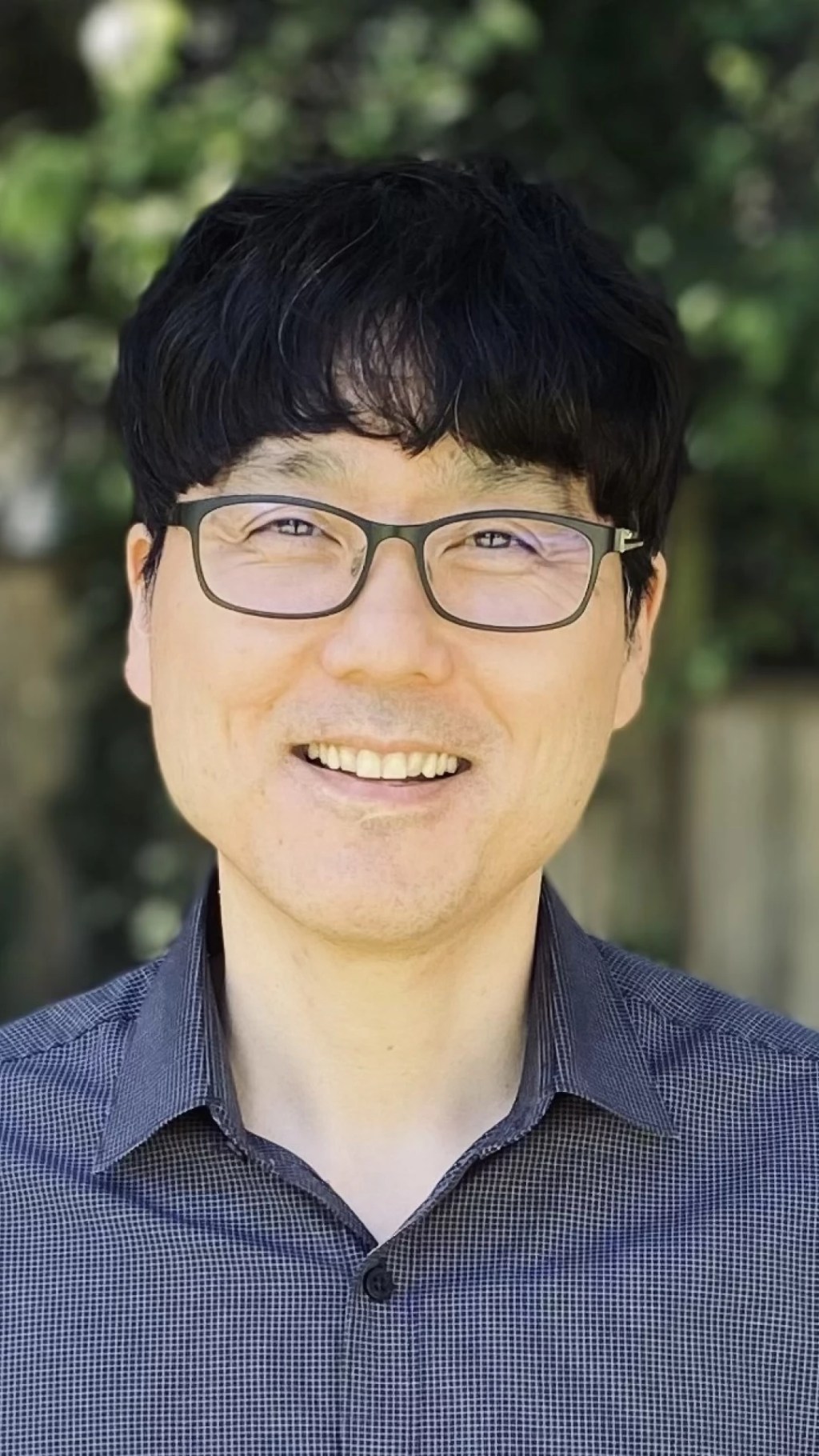
Intimacy with God and Others – Interview with Pastor Daniel So (Episode 3)
Comments
17 responses to “Intimacy with God and Others – Interview with Pastor Daniel So (Episode 3)”
-
Thanks for the interview Pastor Daniel – one thing that struck me was the interesting story of how a pastoral search interview spawned both a mentorship AND a church plant! Praise God!
LikeLike
-
There are two areas where I totally agree with Ps. So. These include prayer as being the lifeline of one’s ministry, and the leaning on the Holy Spirit to find mentorship connections. When I lived in South Korea, I learned that many believers go to church on weekdays for early morning prayer before heading to work. I decided to give it a try and at first it was extremely challenging. I would be physically exhausted from work the previous day, and my flesh did not want to get up. I disciplined myself to get and every time I reached the sanctuary, listened to the sermon, and prayed simultaneously with the congregation, I felt my spirit awaken. After becoming more consistent at attending, I noticed the days I skipped it and went to work were more draining. I was not empowered by prayer and God’s word and was going to work in my own strength. I believe without prayer, I can end up doing ministry in my own strength or wisdom.
For mentorship, I began by asking God, “Lord, please lead me to the right person who can become my mentor.” God impressed on my heart a pastor who I did an interview with for a class assignment in the past. I called him up, and it turned out he had recently retired and now had more time to invest in others to mentor them for ministry.
Gene Takana
LikeLike
-
The part that stood out most to me was the part where he started pastoring at a young age, took a detour for schooling and other areas, but came back to vocational ministry because he realized he missed the pulpit and couldn’t think of a better job than to study and spend time with the word of God.
This reminded me of the quote from Frederick Buechner where he says, “The place God calls you to is the place where your deep gladness and the world’s deep hunger meet.” This pastoral calling is one where our passion to serve God and the world’s need for ministry meets.
I felt this also as I came back from serving at a Christian private school in Korea 2 years ago and started to reconnect with my home church here in Vancouver. I spent months looking for jobs and attending church, but my heart was not at rest simply waiting around on the weekdays and sitting in the pews during church services. My heart did not feel at peace until I started to serve again at church and also serve the next generation through working at Vancouver Christian School.
– Moses Choi
LikeLike
-
I enjoyed listening to this episode and found a lot of encouragement from the interview. Like Gene, I appreciated how Pastor So reminded the listener that “intimacy with God is the lifeblood of ministry.” If we are to have a heart for people, we need the blood of Christ flowing through us, which is only possible through seeking God in our rhythms. I also found Pastor So’s statement that our number one goal should be to be the best sons of God we can be a beautiful reminder. The takeaway that when we are finished here, we trade the ministry vestments for the resurrection clothes was poignant. As Pastor So drew this picture, of how this reality should lead us to long to be devoted sons of the Father, I was taken by the image. When my son or daughter does the things I do in their childlike way, it warms my heart. How good is God that we can worship him in those ways as we follow him? This sort of eschatological image of trading the pulpit for the robes of the resurrection is very encouraging to me
Rob Schmidtke
LikeLike
-
Thank you for this conversation. I resonate deeply with my classmates who described prayer as the “lifeblood of ministry.” Without prayer, we lose our connection to the very reason we minister in the first place. Ministry without Christ quickly becomes dead works, driven more by effort than dependence.
I also appreciated Pastor So’s honesty about how challenging it can be to get up each morning to attend these early morning prayer times, but he confesses that they are worth it as he has never left one of those gatherings without feeling refreshed. This exposed one of my own current struggles: beginning my day with prayer and Scripture. I have fallen into the habit of hitting snooze, falling back asleep, and then rushing to get everyone ready and out the door on time. As a result, my own devotional time with the Lord is often neglected. This conversation served as a much-needed reminder that what feels “impractical” in the moment is often what is most spiritually sustaining.
I was also struck by Pastor So’s approach to friendships within the congregation. His posture of openness, paired with a healthy hesitation, deeply resonated with me. I too find myself cautious about forming deep friendships within the congregation. Two particular dangers come to mind. First, there is the risk of special favour—where a congregant may seek preferential treatment or pressure a pastor or elder to act against their discernment in order to keep the peace. While strong boundaries can help mitigate this, the risk still remains.
Second, there is the concern of oversharing. Sharing personal frustrations with a congregant, even unintentionally, could lead to misunderstandings or broader issues within the church body. These reflections have helped me recognize the importance of wisdom, boundaries, and intentionality when navigating relationships in ministry.
Thank you again for the conversation.
Dylan Parkhurst
LikeLike
-
One of the key points that stood out in terms of Daniel’s approach to intimacy with the Lord is the prioritization of being the beset son of God, rather than a pastor. This is the driving force of any Christian to flourish, not just a pastor. The foundational identity of a Christian is being adopted into sonship and having the inheritance from the Father is what grounds us in being able to serve and minister to others. Having the guarantee of the Holy Spirit that is in us allows us to be empowered for the services of God, and to grow in intimacy to God as well. We are able to deepen our relationship with him through different spiritual practices, but especially in prayer and reading His word. I like how he has a very dedicated and regular rhythm of prayer with a prayer mat.
As our intimacy grows with God, we can also extend our relationship to others in building the kingdom of God. Daniel’s approach to his intimacy with his congregation was also notable in how he gauges his closeness depending on the needs of that church and doing so with care.
LikeLike
-
Through this podcast, I would like to express my gratitude to Pastor Daniel and Professor Piva for providing both engaging and insightful reflections. While this podcast reminded me of many important things, the statement that stayed with me the most was, “Rather than trying to become a good pastor, we must first become good sons.”
Before deciding to pursue ministry, I spent a long time seriously thinking about the question, “What makes a good minister?” Is a good minister someone who pastors a large church? Or someone who is an excellent preacher? Eventually, I came to this conclusion “a good minister is the one who loves God the most, regardless of circumstances or environment.”
However, in order to love God the most, I believe one must live according to God’s Word, walk with Him, and maintain a deeply intimate relationship with Him. When we ask the question, “What is a good son?” the first thing that usually comes to mind is someone who listens to their parents and lives according to their guidance. In the same way, living according to God’s Word and walking closely with Him is what makes someone both a good minister and a good son.
In addition, as mentioned in the podcast, I believe that spiritual rhythms and spiritual disciplines are essential requirements for becoming good sons of God. Listening to this podcast today gave me valuable time to reflect on what kind of minister I should become and how I should pray more specifically moving forward.
Thank you.
LikeLike
-
Pastor Daniel’s ministry overview was an encouragement for me. This is because ministering a Korean-Canadian ethnic church is what I vision for my church as well. My church is an almost-full Korean ethnic church with very minor Canadian-English presence.
Pastor Daniel’s stumbling blocks to intimacy with God is breaking the rhythm and spiritual routine. I resonate with this as the routine is also crucial to my life. This includes not only prayer time but eating time, study time, family time, and community gathering time. This also includes the morning prayer meeting time that Pastor Daniel mentioned, and how this was a key to his intimacy with God. My church has the same prayer meeting, but we do it in the evenings, instead of mornings, and this also has been an impactful and a restful time with God where I devote my time in His presence
Pastor Daniel and Dr. Piva reflected on how male pastors tend to develop intimacy with others mostly when they have a common vision or goal with others. As a brother in Christ, I agree in the sense that I do not make a lot of friends to a deeper extent, but still have two brothers whom I can really say that I can lay my life for them and theirs for mine.
Thank you Pastor Daniel and Dr. Piva for your inputs on intimacy with God and others.
Sunghoon KimLikeLike
-
Thank you, Dr. Piva and Pastor So, for discussing this topic. I enjoyed hearing So’s understanding and example of how the church cultivates intimacy with God. I would love an early morning organized prayer service locally where I could attend. I really liked the story of how the interview at a church led to the planting of a new church. It’s always beautiful to see how God is working in ways that are different than our plans to build up his church. I agree with his assessment that prioritizing tasks over people would be a primary reason that leaves little room for friendships. That, along with not wanting to open up and possibly not wanting to appear to show favoritism? I also found the conversation on the necessity to maintain safe friendships or boundaries helpful. Thank you again for the conversation.
Jacob Enns
LikeLike
-
What stood out to me most in the interview is Pastor So’s comments on friendship in the local Church. His position of taking the matter as a case by case basis I think is entirely the right choice.
I have heard stories of ministers who cultivated friendships in their congregations and fell foul of the old adage “familiarty breeds contempt”. In these cases we are reminded all to suddenly that due to our office we have a great responisiblity on our shoulders. We cannot then always be everyone’s friend, and where being their friend stops us from being their shepherd we have stepped out of bounds.
Yet, Scripture provides no hard rule against them. General wisdom cannot be held dogmatically or else the best benefit of wisdom is lost, which is the ability to evaluate circumstances. So it is I know some pastors who have been able to carefully cultivate close connections in a congregation.
Pastor So’s experience being able to connect closely to his associate pastor seems a natural path. Brothers in arms have naturally the same concerns and goals. These circumstances should be sought and cultivated whereever possible. It is my hope to do just that in my congregation.
LikeLike
-
The interview deeply reshaped the way I think about intimacy with God and others. One statement that struck me most was the reminder to “be the best son of God that you can be,” not merely to focus on the role of being a pastor. Titles and ministry positions will not matter when we come before God; what matters is our identity as His children. This challenged me because it is easy to measure my spiritual life by what I do for ministry rather than who I am before God. I realized that God cares more about my heart and my relationship with Him than my performance or effectiveness in serving others.
Another point that convicted me was the encouragement to make being with God my number one priority and to pray for myself. I often pray about my desires, responsibilities, or the needs of others, but I rarely pray for God to change me, shape my character, and transform my inner life. This reflection helped me see that I sometimes neglect my own spiritual formation. I want to learn to pray more honestly for my own growth and allow God to work deeply in my heart.
The interview also highlighted the importance of rhythm in intimacy with God. Staying in a steady rhythm of prayer and Scripture is difficult for me. Busyness, compromise, and distractions often get in the way. Sometimes I tell myself I will pray or read the Bible later when I “have more time,” but that time rarely comes. Gradually, devotion becomes dry. I realized that compromise is a real trap for me. To stay in rhythm, I need discipline, sacrifice, and even the help of others to keep me accountable.
I was also impacted by the discussion about intimacy with others. Pastors, especially male pastors, often become isolated because they are goal-oriented and focused only on ministry tasks. This can lead to loneliness and a lack of vulnerability. I learned that building friendships beyond ministry work is important. Spending time resting, playing, and simply being human together helps create true connection. Ministry should not replace friendship. I want to be more sensitive to the Holy Spirit in forming relationships and to intentionally seek healthy, safe friendships where I can be open and supported.
Thank you this great interview.
LikeLike
-
It is challenging to hearing that Pastor Daniel changed his mind about the church position ( which could have a closer connection to his mentor physicaly). Sometimes God challenges people to put aside their own plans for His purposes.
The morning prayer part is also very challenging, but inspiring and encouraging too. This reminds me how powerful are those rhythm and spiritual disciplines, as I used to have morning prayer meetings once a week in Cru, and those moments help us prioritise time with God and train us to hear His voice instead of being overwhelmed by busyness and tiredness. Jesus modelled this for us by praying on mountains, even when He could have been doing more physical ministry to heal or preach.
“God cares about our being more than our doing” echoes Pastor Daniel’s encouraging words from his mentor: Be a child (son) of God > be a pastor. We are to wear the robe of a son, not of a pastor.
Lastly, the conversation reminds me that we should build relationships beyond task-oriented goals. Sharing life together strengthens relationships and rapport because it allows more observation and a deeper understanding of a person.
LikeLike
-
I come from a Chinese/English bilingual congregation as well, so I can resonate with how Pastor So described the unique challenges of a multilingual and multigenerational congregation.
Here are some of my key takeaways:
- Where does our identity come from? Our identity isn’t based on your role or performance, because we won’t be pastors anymore in the resurrection. Incidentally, our identity as children of God is the only thing that can’t be taken away because it is as firm as God’s promise of salvation.
- How does we get that identity drilled into our head? So mentioned the practice which I call “Time Alone with God”. I was first introduced to this discipline when I first attended SYC in 2003. It doesn’t take long. It’s only 15 minutes a day, but once that habit is built, so is my intimacy with God.
- Why can’t men cultivate friendship like women do? The biggest pitfall is treating the means as an end. In other words, if we treat common activity, interests and goals as friendship itself, we stop short. These things are bridges to friendship, and we should not dwell there.
- What’s common between intimacy with God and intimacy with People? The answer may be more surprising and simple than you think: It’s shared worldview, and from which shared values develop. Friendship goes above and beyond shared activities and goals, and if we treat our intimacy with God as simply asking God to help us with our tasks, then that attitude will inevitably reflect onto your relationship with people.
- How to balance between openness and discernment when choosing friends? Personally I don’t think there is a conflict to be balanced because they are actually two dimensions. Openness is your willingness to be vulnerable, like how people in Korean sauna are all naked. Discernment is about setting healthy boundaries, just like how the naked men and naked women are separated in the sauna. Discernment comes first, then openness. It’s not about deciding who to let on your bus, but rather who to keep off your bus.
LikeLike
-
Lots of sobering reminders especially for people entering vocational ministry. I love what Pastor Daniel said, that losing the rhythm of your spiritual disciplines is danger. This reminds me how important it is for us to have that rhythm, that space for connection and intimacy to happen. Rhythms in our lives keep us running – heartbeat, breathing, waking and sleeping. If we are not too careful, losing our rhythm can easily lead us to a downward spiral.
Another reminder is that we should always remember who we are first and foremost – sons, children of God – instead of whatever it is that we do, whether that is pastoring or leading or teaching. I think it’s a slippery slope when we get busy with all these ministries that we end up letting what we do define who we are. Being comes before doing.
LikeLike
-
Thank you for this rich and honest conversation. One theme that stood out to me across the episode was the reminder that intimacy with God is not a supplement to ministry but rather it is the foundation of it. Hearing prayer described as the lifeline of ministry resonated deeply with me. It’s sobering how easily ministry can slip into functioning on discipline, gifting, or busyness and even dependance on self rather than dependence on the Spirit. What feels inconvenient or impractical – early mornings, stillness, unhurried prayer is often what most reorients the heart.
I was especially struck by the phrase, “Rather than trying to become good pastors, we must first become good sons.” That reframes everything. Before competence, calling, or visibility, there is relationship. Without a lived, daily walk with God, even faithful service can slowly become hollow.
I also appreciated the honesty around mentorship and relationships in ministry. Especially the importance of seeking guidance prayerfully, while holding wisdom and boundaries in community. This episode served as a needed reminder that spiritual rhythms aren’t an add-on to the christian life, but rather they shape who we are becoming.
Grateful for this conversation and the invitation to reflect more intentionally on intimacy with God.
LikeLike
-
Grateful for the chance to hear from a pastor in the greater Vancouver area since I live here to. Incredible to hear about his process from being a pastor at 21, to quit, then regaining a desire and remembering the call to go back.
His heart for morning prayer re-ignited that desire in me. Doing it Tuesday to Friday is a neat idea. This practice felt even more essential when I heard what he said next:
“Be the best son of God that you can be, it is more important that you become the best son of God that you can be. When you go to heaven… you wear the sons robe.”
I loved this line. It encouraged me. Before being a minister, I am son. After being a minister I am a son.
A beloved son of God, 24 hours a day. This is the core of our identity and it should not only be known to us but communicated to those we minister too. I think making sure the church knows we have this understanding would be very valuable.
His heart to prepare sermons that are not from a dry heart and mind challenged me. Overall grateful for what he shared.
LikeLike
-
Thanks for the talk, Prof. Piva, it was really inspiring to listen to about the various ministerial aspects. I admire and completely agree with most of the thoughts shared by Pastor Daniel, especially maintaining the spiritual discipline, having intimacy with God and with others, having an active prayer life and giving time to yourself to rejuvenate the strength to minister God’s people more effectively.
However, I slightly disagree from his ministerial/pastoral goals.
11:45-58, he says a few such things which might sound appealing but i do not find any biblical backing or convincing teaching to support these thoughts which he shared;
“To be the best Son of God, he can be. It is more important to become best son than of becoming a best pastor. You shall not enter heaven wearing the robes of a Pastor, you will be wearing the robes of a son. Your no.1 goal should not be to be a good pastor, but your priority should be to become the best Son”
My opinion would be
The Bible mentions only about Jesus, whom the Father calls, ” His dear Son in whom He is well pleased”. It is only by accepting this Son as our Lord and Savior, we no longer remain slaves but become children of God and co-heirs with Christ.
The Bible doesn’t specifically mention ‘robes of a son’; however, we do read about the garment of righteousness, holy garments, and garments washed in the blood of the Lamb. But, all of these are solely grafted in the mighty act of God in His Son Jesus, not by one’s personal achievements or accomplishments, but by the mercy of the Almighty.
Denying the pastoral role and focusing solely on being ‘the best son’ is again contrary. Jesus called Peter and assigned to him a threefold ministry: ‘Feed my lambs, Take care of my sheep, and feed my sheep.’ (John 21:15-17).
LikeLike


 Stef Piva
Leave a comment